
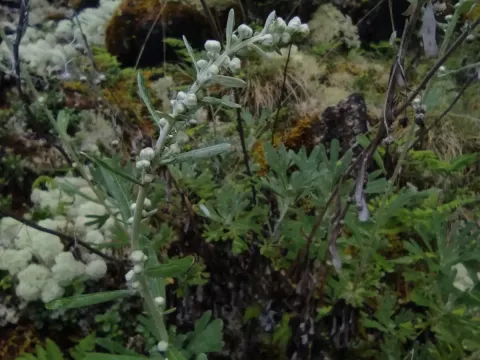
Hare-headed wormwood
Artemisia lagocephala
Hare-headed wormwood (Artemisia lagocephala) is a member of the Asteraceae family. This perennial herb is native to the mountain regions of Eastern Siberia, the Far East, and Mongolia, thriving in harsh continental climates.
What the section contains
Hare-headed wormwood
The plant is biologically adapted to rocky, stony soils and alpine meadows. It is highly resilient, showing strong performance in regions where other crops struggle due to temperature extremes and poor soil quality.
For cultivation, the plant requires well-drained, porous soils. Waterlogging is detrimental to its root system, making sandy loam or gravelly soil types ideal for maintaining healthy growth and development.
High solar radiation is a key requirement for this species. It demands full sun exposure to synthesize the complex secondary metabolites that give the plant its characteristic chemical profile and therapeutic value.
Agricultural preparation involves precise land leveling and mechanical weed suppression. Because the seeds are tiny, sowing techniques must focus on shallow placement and maintaining excellent seed-to-soil contact for optimal germination rates.
The plant is naturally robust and possesses strong antibacterial properties, which limit the incidence of fungal pathogens under favorable environmental conditions.
Occasional infestations of leaf-eating insects and specific aphid species can occur during wet and warm spells. Early detection via field scouting is the primary control strategy.
Chemical intervention is generally discouraged to preserve the organic standards of the harvest. Integrated pest management (IPM) is the preferred approach for commercial growers.
Root pathogens such as nematodes are avoided by adhering to long-term crop rotation schemes, typically with a minimum four-year gap between replanting in the same field.
Overcrowding of plants can create microclimates conducive to disease; therefore, maintaining recommended plant spacing is essential for air circulation and humidity control.
The harvest is conducted at the peak of the flowering stage, ensuring the concentration of essential oils and active compounds in the biomass is at its highest level.
Mechanical harvesting using specialized mowers is the standard for large-scale operations, allowing for a consistent cut height of 10–15 cm to protect the crown of the plant.
Immediate post-harvest drying is required to prevent fermentation. Drying processes must be conducted in controlled environments with temperatures not exceeding 45°C.
The dried product is assessed by its silver-green coloration and the potency of its specific bitter-aromatic fragrance, which indicates proper processing and handling.
Finished goods are stored in climate-controlled warehouses, using moisture-proof packaging to ensure stability of active constituents until shipment to manufacturers.