
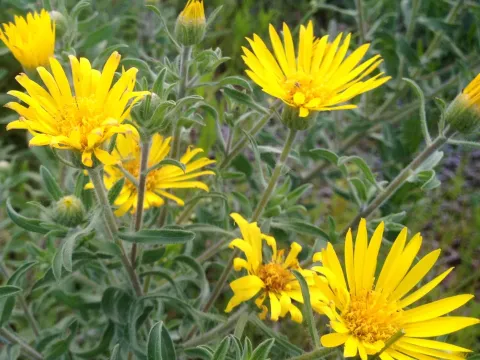
Hairy goldenaster
Heterotheca villosa
Sowing Hairy goldenaster is typically done by seeds in late autumn or spring after a period of cold stratification. The seeds require surface sowing, as they need light to germinate successfully.
What the section contains
Hairy goldenaster
In the wild, this plant spreads via self-seeding, forming dense colonies. When cultivating, it is essential to maintain proper spacing between individual plants to prevent overcrowding and ensure adequate airflow.
Optimal timing for direct outdoor sowing occurs after the risk of severe frost has passed. The germination rate is generally high, provided that the seeds are fresh and have undergone a dormancy period.
For a more controlled environment, container-based propagation can be used, followed by transplantation to a permanent site. This method typically results in a higher survival rate for young seedlings.
The choice of substrate is critical: it must be light and have excellent drainage properties. Heavy, clay-rich soils should be avoided as they may cause seed rot during the germination phase.
Hairy goldenaster (Heterotheca villosa) is a perennial herbaceous plant belonging to the Asteraceae family. It is native to dry, open spaces across North America, including prairies, hillsides, and rocky slopes.
This crop has minimal requirements for soil fertility and prefers poor, rocky, or sandy substrates. It exhibits exceptional drought tolerance due to its deep taproot system, which allows it to access moisture far below the surface.
The primary requirement for site selection is full sun exposure. The plant is highly heliophilic; shade exposure causes it to become leggy, losing its characteristic compact, mound-like growth habit and reducing flower production.
Hairy goldenaster is highly adaptable to extreme climates, surviving both hot summers and severe winter temperatures. Its natural hardiness makes it an excellent choice for zones with significant seasonal variation.
Agricultural management is low-input, requiring only periodic weeding during the establishment year. Once mature, the plant requires almost no supplemental irrigation or fertilization.
The plant possesses high natural immunity to most common fungal diseases affecting garden crops. Powdery mildew may occur only under conditions of extreme humidity combined with stagnant air.
Pests rarely cause significant damage to Hairy goldenaster. Due to the specific chemical profile of its foliage and stems, it is generally unappealing to common garden pests such as aphids or spider mites.
Occasionally, in areas with poor drainage and excessive moisture, root rot can develop. This condition is a direct result of waterlogging in the root zone, which this species cannot tolerate.
To prevent potential pest or disease outbreaks, it is recommended to maintain site sanitation and avoid the use of nitrogen-rich fertilizers, which promote rapid, soft growth vulnerable to pathogens.
Overall, it is one of the most resilient species for low-maintenance landscapes. Its robust biological constitution eliminates the need for chemical pesticides during the entire growing season.
The economic use of Hairy goldenaster is concentrated in ornamental horticulture and the design of prairie-style gardens. It is valued for its long-lasting, brilliant yellow inflorescences.
Seed collection is performed once the seed heads have fully dried on the stems. The stalks are cut and dried in a ventilated area, after which the seeds are separated from the fluffy pappus.
Flowering occurs from mid-summer through late autumn. This makes the plant a valuable nectar source, attracting a diverse range of pollinators, including bees and butterflies, to the site.
In landscaping, it is recommended to leave the dried seed heads throughout the winter. They maintain their structure and provide visual interest, especially when frosted. The foliage is pruned down to the ground in early spring.
Due to its ability to stabilize soil with its extensive root system, Hairy goldenaster is utilized for erosion control on slopes and sandy embankments in arid climates.