
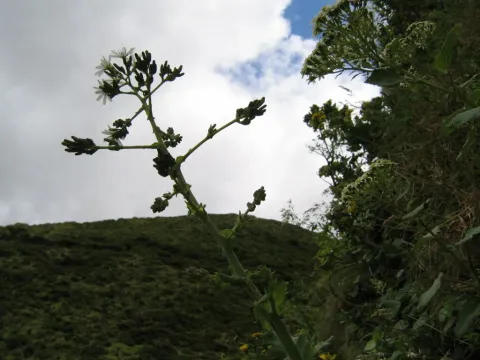
Watson's Lettuce
Lactuca watsoniana
Watson's Lettuce (Lactuca watsoniana) is a distinct species within the Asteraceae family, native to the Azores archipelago. As a specialized botanical species, it requires environmental conditions that mimic its natural mountainous and maritime habitat.
What the section contains
Watson's Lettuce
The plant thrives in cool, humid environments with consistent light levels. It is highly sensitive to heat stress, which makes greenhouse cultivation in temperate regions the most viable option for maintaining high-quality leaf development throughout the season.
Soil composition must be rich in organic matter and possess excellent drainage capabilities to prevent root hypoxia. A balanced NPK fertilizer program is essential to support the vegetative growth of the succulent, nutrient-dense leaves.
Managing the light environment is crucial; while the plant requires photosynthesis, it performs best under diffused light conditions. In professional settings, shading systems are often employed to prevent leaf burn during periods of peak solar intensity.
Consistent moisture levels are required for optimal biomass production. The irrigation strategy should focus on keeping the root zone evenly moist without reaching saturation, as this species is particularly susceptible to water-logging issues.
Downy mildew represents a major biological threat to this species, especially in environments with stagnant air. Maintaining proper spacing between plants is a vital cultural practice to reduce the incidence and spread of fungal spores.
Mollusks such as slugs are primary pests, attracted to the succulent foliage. Integrated pest management (IPM) strategies, including physical barriers and organic baits, are recommended for maintaining plant health without toxic residues.
Aphid infestations can occur in protected cropping systems, leading to leaf curling and growth retardation. Early detection and the introduction of biological control agents are effective methods for managing aphid populations efficiently.
Root rot pathogens become prevalent if the drainage system is compromised or if moisture management is inconsistent. Utilizing sterile substrates in seedling stages helps mitigate the initial risk of soil-borne diseases.
Viral infections can result in chlorosis and stunted growth. Because these are often spread by insect vectors, proactive monitoring and controlling the population of thrips and whiteflies are essential for protecting the crop's yield.