
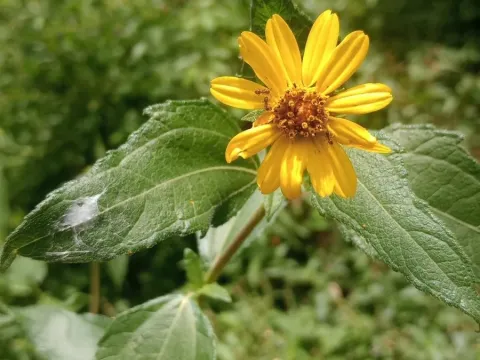
Wedelia
Wedelia
Wedelia (genus Wedelia) is a prominent group of perennial herbaceous plants and subshrubs belonging to the Asteraceae family. The most widely cultivated species, often referred to as Sphagneticola trilobata, is recognized for its robust growth habit and widespread use as a groundcover.
What the section contains


Wedelia
Originating from the tropical regions of Central and South America, Wedelia has become naturalized in numerous tropical and subtropical areas globally. It is highly valued for its ability to create dense, vibrant green foliage mats that suppress weeds and prevent soil erosion.
The plant thrives in full sun to partial shade and is highly adaptable to various soil types, ranging from sandy to clay-rich substrates. However, it demonstrates its best performance and most vigorous spread in fertile, well-draining soils with consistent moisture availability.
Climatic requirements are specific to tropical conditions, as Wedelia is frost-intolerant and requires warm temperatures throughout the year. It does not possess dormancy mechanisms capable of surviving cold winters, which limits its outdoor use to frost-free environments.
Agronomic management involves periodic pruning to keep the plant within designated boundaries. Because stems root readily at the nodes upon contact with the ground, regular trimming is essential to prevent the plant from becoming overly invasive in adjacent landscaped or cultivated areas.
The most significant threats to Wedelia health are fungal pathogens, particularly root rot, which typically occur in soils with poor drainage or during prolonged periods of waterlogging. Over-saturation is the leading cause of plant decline in managed landscapes.
Pest issues include infestations of aphids, whiteflies, and spider mites, which feed on the sap of young shoots and foliage. These pests can significantly reduce the vitality of the plant and cause yellowing or deformation of the leaves if left uncontrolled.
Powdery mildew may develop in dense, poorly ventilated planting sites where humidity levels remain high for extended periods. Promoting airflow through structural pruning is an effective cultural control method to minimize the risk of fungal spread.
Viral infections can sometimes impact Wedelia, manifesting as mosaic patterns or stunted growth. Since viral diseases are often transmitted by sap-sucking insects, maintaining a vigorous plant through proper nutrition and pest control is critical for disease management.
Invasive management is an additional concern; in many regions, Wedelia is considered an environmental weed. Agronomists often focus on containment strategies to prevent the species from encroaching into native ecosystems or agricultural crop fields.