
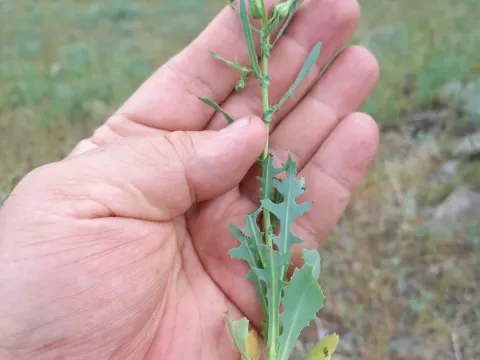
Wavy lettuce
Lactuca undulata
Wavy lettuce (Lactuca undulata) is a member of the Asteraceae family. It is an herbaceous annual plant often associated with arid or semi-arid environments in its native range.
What the section contains
Wavy lettuce
The sowing season typically begins in early spring once soil temperatures reach a consistent 8-10 degrees Celsius, facilitating rapid germination and establishment.
Farmers should consider the photoperiod requirements of the plant; like many lettuce varieties, it is best to sow in a manner that avoids peak heat to prevent premature bolting.
Seeds are sown in rows with a spacing of approximately 25-30 centimeters, which allows for sufficient airflow and simplifies maintenance during the growth cycle.
Given the small size of the seeds, shallow planting at a depth of 1 centimeter is recommended to ensure they receive sufficient light to trigger the germination process.
This crop thrives in well-drained, light, and nutrient-rich soils. A neutral pH level between 6.0 and 7.0 is ideal for optimal nutrient uptake and root development.
Climate is a primary factor in cultivation; the plant prefers cool and temperate conditions. Extreme heat often leads to bitter leaves and a rapid shift to the reproductive stage.
Consistent moisture is essential for producing succulent leaves. Irrigation systems should be managed to ensure the soil remains moist without becoming waterlogged.
Adequate sunlight is required for photosynthesis, although light shading may be necessary in warmer climates to prevent stress and maintain leaf tenderness.
Successful cultivation involves maintaining a balanced rotation cycle, avoiding the planting of lettuces in the same soil for at least three consecutive years.
Common fungal threats include downy mildew and powdery mildew, which are particularly problematic during periods of high humidity and poor field ventilation.
Root rot can occur if soil drainage is insufficient, often leading to stunted growth or total plant collapse during the peak growing season.
Pests such as slugs and snails are significant threats, especially to young seedlings, as they can consume large portions of the leaf tissue overnight.
Aphids pose a constant threat by clustering on the underside of leaves and stems, sucking nutrients and acting as vectors for various plant viruses.
- Use of pest-resistant cultivars
- Consistent weed management
- Strategic irrigation timing
- Use of row covers for early protection
Harvesting should occur when the leaf rosettes reach their target market size, which is typically between 45 and 60 days post-seeding, depending on the environment.
It is advisable to harvest early in the morning to take advantage of peak plant turgidity, which significantly improves the shelf life and freshness of the cut greens.
The harvest method usually involves a clean cut at the base of the rosette, ensuring that the leaves are handled gently to avoid bruising the delicate tissue.
Post-harvest handling is critical; the leaves should be cooled immediately to remove field heat and stored in environments with high humidity to prevent wilting.
Sorting and cleaning should take place immediately following the harvest to remove debris and damaged leaves, ensuring that only premium product reaches the consumer.