
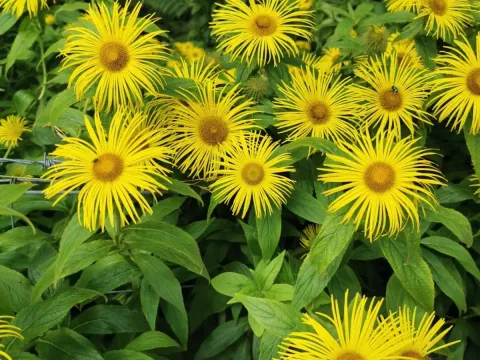
Inula hookeri
Inula hookeri
Sowing seeds of Inula hookeri is best performed in early spring when soil temperatures reach 10-12 degrees Celsius. For the production of seedlings, it is recommended to start in a greenhouse during March, allowing the plants to establish a strong root system before transplantation.
What the section contains
Inula hookeri
Direct outdoor sowing should take place in late April or early May. It is essential to maintain consistent moisture levels during the germination phase, as the seeds require steady environmental conditions to ensure successful establishment in the field.
Seeds should be sown at a shallow depth of approximately 0.5-1 centimeter. Given their small size, excessive soil coverage can prevent germination, so surface pressing after sowing is necessary to ensure good contact between the seed and the soil particles.
The spacing plan must account for the mature size of the plant. A distance of 60-70 centimeters between rows and 40-50 centimeters between individual plants is optimal to allow for sufficient vegetative growth and air circulation.
To improve germination rates, a short period of cold stratification for 2-3 weeks at temperatures between 0 and 5 degrees Celsius is advised. This process helps synchronize emergence and produces a more uniform crop for subsequent management.
Inula hookeri is a perennial herb belonging to the Asteraceae family, native to the Himalayan mountain regions. It is well-adapted to cool and moist climates, requiring sites that can provide consistent humidity throughout the growing season.
The crop thrives in fertile, well-drained loamy or sandy soils with a neutral or slightly acidic pH. Waterlogging is detrimental, so planting in slightly elevated areas or providing adequate subsurface drainage is a critical prerequisite for healthy development.
While the plant is sun-loving, it benefits from light shade during the hottest midday hours in warmer climates. Applying organic mulch around the base helps keep the root zone cool, which significantly improves plant vitality and biomass production.
Regular irrigation is necessary during the active growth phase, particularly as the flower buds develop. Water stress can lead to reduced flowering and lower concentrations of active secondary metabolites within the root system, impacting final harvest quality.
Routine cultivation tasks include weeding and hoeing the inter-row spaces to ensure soil aeration. Because the plant grows relatively slowly during its first year, preventing weed competition is vital to ensure it does not become stunted.
The primary economic value of Inula hookeri lies in its roots, which are harvested for their therapeutic properties. Yields are highly dependent on soil fertility, the precision of nutritional management, and adherence to consistent irrigation schedules.
Harvesting for medicinal root production should generally begin in the third year of growth. At this stage, the root system has accumulated sufficient mass and concentration of active components to be commercially viable for processing.
Yield performance is enhanced by the judicious use of organic matter, which supports long-term soil health. Excessive nitrogen fertilization should be avoided, as it tends to favor leafy growth at the expense of root storage organs, potentially reducing the overall harvest weight.
High-quality planting material is a key driver of yield. Utilizing seeds sourced from vigorous, disease-free parent plants ensures uniform development and helps maintain the standard of the product for the pharmaceutical or nutraceutical markets.
Crop rotation is essential for sustaining high yields over several planting cycles. Repeatedly cultivating the same species on the same field can exhaust specific soil nutrients and increase the risk of soil-borne diseases, requiring a balanced agricultural rotation.
Fungal diseases represent the most significant threat to this crop, particularly in environments with poor air circulation or excessive moisture. Powdery mildew can quickly affect foliage, leading to reduced photosynthetic capacity and overall plant decline.
Root rot is a critical issue that occurs when drainage is insufficient. Because this disease often develops underground, symptoms may not become visible until significant damage has occurred, making prevention through water management the primary strategy.
Pests such as aphids and spider mites frequently target the plant during dry spells. Biological control methods or soft soaps are recommended over synthetic chemicals to ensure the raw harvested material remains free from unwanted residues.
Slugs and snails can cause severe damage to young seedlings in early spring. Physical barriers, such as wood ash or crushed gravel around the base of the plant, can effectively prevent these pests from accessing tender green growth.
Proactive disease management involves monitoring plant health and immediate removal of any infected individuals. This reduces the inoculum load in the field and helps to protect the remaining crop from systemic infection.
Harvesting the roots of Inula hookeri occurs in the autumn once the aerial parts begin to senesce and die back. This period, usually spanning from September to October, marks the time of peak accumulation of beneficial compounds in the roots.
The roots must be carefully excavated, cleaned of soil, and washed in cool, running water. Rapid cleaning is preferred to minimize the time the roots spend submerged, which helps retain essential water-soluble active ingredients.
Preparation for drying involves slicing the roots into uniform fragments. Drying should take place in a well-ventilated space or specialized dehydrator at temperatures not exceeding 45 degrees Celsius to prevent the loss of volatile oils and medicinal potency.
The final product is considered ready when the root pieces are brittle and break with a clean snap. Before storage, the dried material should be inspected for any signs of mold, rot, or insect damage to ensure purity.
Storage should be handled in cool, dry, and dark conditions, preferably in paper sacks or airtight containers. Regular monitoring for moisture content is essential to ensure the medicinal quality of the harvest remains stable over the intended shelf life.