
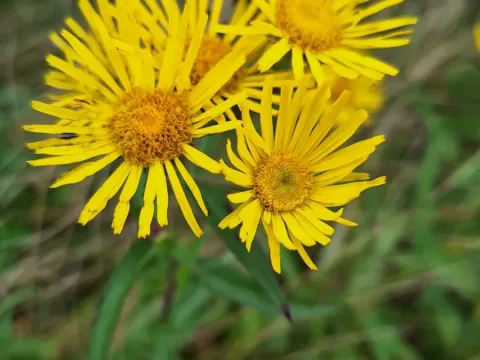
Japanese inula
Inula japonica
Sowing Japanese inula seeds into the soil is carried out in early spring, as soon as the soil warms up to 5-8 degrees Celsius, or before winter in late October. It is preferable to use freshly harvested seeds to obtain uniform germination, as they possess high viability immediately after ripening.
What the section contains
Japanese inula
For spring sowing, seeds require prior stratification for about a month at a temperature of 2-5 degrees Celsius. This practice significantly increases germination energy and ensures even emergence of seedlings across the planting rows.
The seeding depth should not exceed 1-1.5 centimeters, as the seeds are quite small and may fail to germinate if planted too deeply. It is recommended to lightly mulch the sown area with peat to retain moisture in the topsoil layer.
The optimal planting arrangement involves row spacing of 60-70 centimeters, which facilitates maintenance and mechanical weeding between rows. Within the row, a spacing of approximately 30-40 centimeters should be maintained between individual plants.
When using transplant methods, seeds are sown in trays in March, and the seedlings are transferred to open ground once they reach the 3-4 true leaf stage. This approach allows for a well-developed root system before the start of the autumn season.
Japanese inula belongs to the Asteraceae family and is a perennial herbaceous plant with a robust rhizome. In the wild, this crop is found in the Far East, preferring moist meadows, riverbanks, and light forest clearings.
The plant has moderate light requirements; however, it develops most productively in open, well-lit areas. In shaded conditions, the concentration of biologically active compounds in the roots decreases significantly.
The plant is quite demanding regarding soil quality, preferring deep, fertile, loamy, or sandy-loam soils with a neutral or slightly acidic reaction. An important condition is the absence of stagnant groundwater, despite the plant's natural preference for moisture.
The crop possesses good frost resistance, allowing it to successfully overwinter in temperate climates without additional covering. However, young plants in their first year of life require protection against severe late spring frosts.
Care for the plantation includes regular weeding, soil loosening, and moderate watering during dry spells. Fertilizer applications using minerals with high potassium and phosphorus content promote intensive root mass accumulation.
The productivity of Japanese inula is measured by the yield of raw and dry roots, which represent the main commercial part of the plant. With proper agricultural management, the yield of rhizomes can reach 1.5-2 tonnes per hectare in dry weight.
The maximum output of commercial product is observed in the second or third year of the crop's life, when the root system reaches full maturity. This is the period when the concentration of medicinal components is at its peak.
In addition to rhizomes, flower heads are also of value, collected during the full bloom phase for pharmacological use. The yield of flower heads is approximately 300-500 kilograms per hectare in dry form.
Regular application of organic fertilizers, such as manure or compost, significantly boosts rhizome yield. Organic matter should be applied in the autumn under deep plowing before establishing the plantation.
An important factor affecting the final volume of harvested raw material is the quality of planting stock and plant density. Oversized plantings lead to stunted root development and lower quality of the final commercial product.
The primary threats to Japanese inula are fungal diseases that develop under conditions of excessive soil moisture. Among these, root rot is the most common issue, affecting the underground part of the plant.
To prevent disease, it is recommended to follow a proper crop rotation schedule and avoid planting inula after other Asteraceae crops. It is also important to remove weeds in a timely manner, as they often act as infection reservoirs.
Among pests, various species of aphids and spider mites pose the greatest danger, feeding on the juices of young leaves. Affected plants show slowed growth and reduced accumulation of essential nutrients.
In cases of significant insect infestation, approved biological pesticides should be used to maintain the ecological purity of the medicinal raw material. The use of harsh chemical insecticides on inula plantations is highly discouraged.
Slugs and snails can damage young seedlings at the beginning of the growing season, especially during rainy weather. Control measures mainly involve mechanical collection or the installation of traps in areas with high humidity.
Harvesting Japanese inula roots is performed in the autumn, after the natural senescence of the above-ground foliage, when the plant has finished accumulating beneficial compounds. This typically occurs in October.
Specialized equipment, such as brackets or plows, is used for digging, allowing the underground part to be extracted fully without damaging the rhizome structure. On smaller plots, manual excavation with garden forks is more efficient.
After harvesting, the roots are cleaned of soil, washed in running water, and small rootlets are removed. The raw material is then sliced into segments 10-15 centimeters long to ensure uniform drying.
Drying is carried out in well-ventilated rooms or in specialized drying chambers at temperatures not exceeding 40 degrees Celsius. Exceeding this temperature threshold causes valuable essential oils to evaporate, diminishing the product's quality.
Dried raw material should be stored in paper bags or wooden containers in a dry, cool place. Under proper storage conditions, Japanese inula retains its medicinal properties for up to three years.