
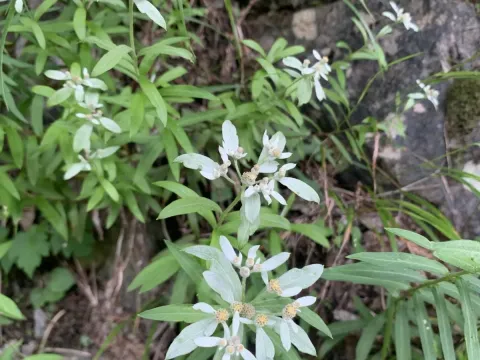
Japanese edelweiss
Leontopodium japonicum
Sowing Japanese edelweiss (Leontopodium japonicum), a member of the Asteraceae family, is best performed in late winter or early spring in a greenhouse. The seeds are minuscule, so they should be surface-sown on a moist substrate and only lightly pressed down without covering with heavy soil.
What the section contains
Japanese edelweiss
Successful germination requires a period of cold stratification, mimicking the harsh mountain climate of its origin. A period of 3 to 4 weeks at low temperatures is necessary to break dormancy effectively.
Once seedlings have developed two true leaves, they should be pricked out into individual pots. A well-draining, sandy compost mix is crucial to maintain root health and prevent damping-off disease in young plants.
Transplanting into the open field occurs once the risk of frost has passed. Plants should be hardened off properly to ensure they can withstand the full sun exposure necessary for their development.
The spacing between plants should be approximately 20 to 25 centimeters. This distance ensures adequate airflow, which is critical for preventing fungal diseases in the dense leaf rosettes of the plant.
The Japanese edelweiss originates from high-altitude mountainous regions of East Asia. This evolution makes it a light-demanding crop that requires full sun throughout the day to retain its characteristic silvery woolly pubescence.
Soil requirements are strict regarding drainage. It thrives in gritty, rocky, or sandy soils with a neutral to slightly alkaline pH. Clay soils that retain moisture are generally unsuitable for cultivation.
The plant is highly drought-tolerant once established but cannot survive waterlogged soil conditions. Proper irrigation management, focusing on soil aeration, is a key agronomic factor for long-term survival.
Climatic adaptability includes high frost resistance; however, the plant is vulnerable to winter wetness. Providing a site with a natural slope or raised bed significantly improves the health of the root system.
Fertilization should be kept to a minimum. Applying high-nitrogen fertilizers is counterproductive, as it encourages excessive vegetative growth at the expense of the plant's structural integrity and flowering.
Root rot is the most significant threat to the Japanese edelweiss, typically caused by pathogens thriving in poorly drained soils. Immediate removal of affected plants is essential to stop disease spread.
Powdery mildew can occur during periods of high humidity and low airflow, leaving white spots on the leaves. Regular inspection and prophylactic fungicide treatments can help manage this during unfavorable weather.
Slugs and snails are the primary pests that damage the succulent foliage and tender young shoots during the growing season. Implementing physical barriers is the most recommended management practice.
Aphids occasionally colonize the flower heads during dry spells, which may distort the growth of the inflorescence. Integrated pest management using insecticidal soaps is effective if infestations become significant.
Nematodes may also pose a risk if the plant is grown in unfavorable soil conditions, leading to stunted development and yellowing leaves. Crop rotation or soil solarization can be used in commercial settings.