
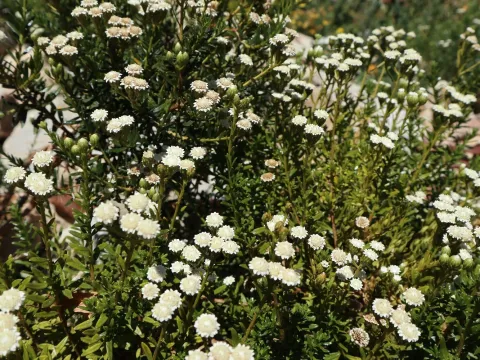
Ixodia flindersica
Ixodia flindersica
Ixodia flindersica is a perennial subshrub belonging to the Asteraceae family. It is native to Australia, specifically endemic to the Flinders Ranges, where it thrives in rocky, arid landscapes.
What the section contains
Ixodia flindersica
The species is perfectly adapted to Mediterranean-style climates characterized by hot, dry summers and mild, wet winters. When cultivating this plant, it is essential to prioritize soil drainage, as the species is highly susceptible to root diseases caused by waterlogged soils.
Soil requirements for Ixodia flindersica include low phosphorus levels. Like many Australian natives, it does not respond well to heavy fertilization, which can lead to toxicity issues and plant decline.
Botanically, the plant is recognized by its rigid foliage and distinctive "paper-like" flower heads. These structures are adapted to endure dry conditions, making the species an excellent candidate for water-wise gardening.
Full sun exposure is a mandatory condition for successful development. Shady or low-light conditions typically result in stunted growth and a significant reduction in flower production.
The primary agricultural application for Ixodia flindersica is the production of everlasting flowers for the floriculture industry. The harvest is timed when the inflorescences are fully developed and firm.
Proper harvesting involves cutting the stems early in the day after the dew has evaporated. This ensures that the material has the lowest moisture content, which is crucial for successful drying.
After harvesting, the stems should be bundled and hung upside down in a well-ventilated, dark area. This method ensures that the petals remain straight and maintain their vibrant pigmentation.
The shelf life of the harvested product is exceptionally high, with stems retaining their shape and color for several years if stored in a climate-controlled, dry environment.
Strategic pruning during harvest also helps maintain the health of the perennial stock, ensuring vigorous regrowth for subsequent flowering seasons.