
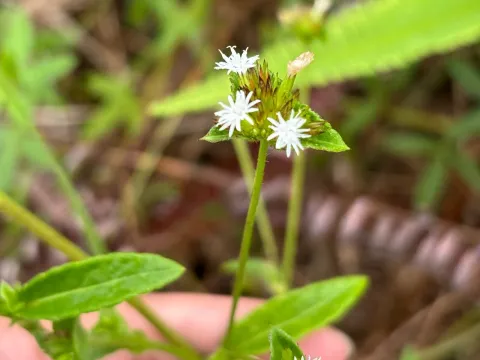
Soft elephant's foot
Elephantopus mollis
Soft elephant's foot (Elephantopus mollis) is a herbaceous perennial plant belonging to the Asteraceae family. Native to tropical and subtropical regions across Asia, Africa, and the Americas, it is widely recognized for its ecological adaptability in diverse tropical habitats ranging from clearings to agricultural landscapes.
What the section contains
Soft elephant's foot
The plant thrives in warm climates and requires consistent temperatures, typically between 20°C and 30°C, to maintain active growth. It is highly intolerant of frost, meaning that in temperate climates, cultivation is restricted to greenhouses or as a seasonal annual crop.
For optimal growth, Elephantopus mollis requires well-drained, fertile soil with a slightly acidic to neutral pH level. Proper drainage is essential, as waterlogged conditions often lead to root rot and other physiological stressors that hinder the plant's development and potency.
Botanically, the species is distinguished by a basal rosette of pubescent leaves and upright stems that can grow up to one meter in height. Its flowers, arranged in small, dense heads, exhibit the classic characteristics of the Asteraceae family, with a structure designed for efficient pollination by insects.
In terms of economic value, this plant is primarily utilized in traditional medicine. Its extracts are researched for potential anti-inflammatory, antimicrobial, and antioxidant properties, which makes it an important botanical source for local healthcare practices and pharmaceutical research.
The primary threats to Elephantopus mollis crops are fungal infections, which are often exacerbated by poor air circulation and excessive humidity. Diseases such as leaf spot and root rot are common in dense planting schemes where moisture gets trapped near the base of the plant.
Pests, particularly caterpillars and various leaf-feeding insects, pose a significant risk to the plant's biomass. In dry climates, spider mites may also appear, clustering on the underside of leaves and draining the plant's resources, leading to chlorosis and stunted growth.
Integrated pest management is recommended to protect the crop. This involves maintaining optimal plant spacing to promote airflow, which naturally reduces the risk of fungal spread. Regular field inspections are necessary to identify early signs of infestation or disease progression.
Biological controls, such as introducing beneficial predatory mites or utilizing neem-based sprays, provide an effective and environmentally friendly way to manage pest populations. Avoiding heavy synthetic pesticides is crucial if the plant is intended for medicinal or therapeutic use.
Cultural practices, including weed control and the removal of infected plant debris, play a vital role in preventing the overwintering of pathogens. By keeping the growing area clean and well-monitored, farmers can ensure the longevity and quality of the soft elephant's foot crop.