
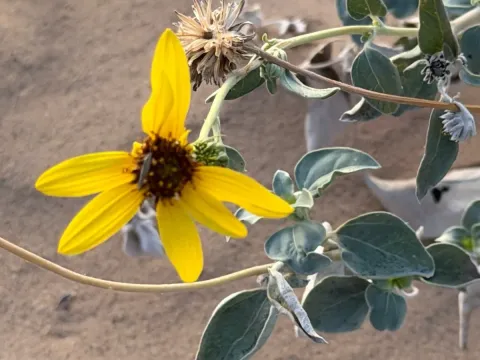
Helianthus niveus
Helianthus niveus
Sowing of Helianthus niveus is typically conducted in the spring season when soil temperatures reach a stable range of 15 to 20 degrees Celsius for optimal germination.
What the section contains
Helianthus niveus
The seeds require a period of stratification to break innate dormancy, ensuring higher emergence rates in nursery or field conditions.
Planting depth should be maintained at approximately 3 to 5 centimeters, depending on the moisture level of the substrate and the texture of the soil.
Adequate spacing is crucial to allow the plant to spread its roots, with recommended intervals between rows of at least 70 to 90 centimeters.
Seedbed preparation should focus on creating a loose, well-aerated structure to prevent seedling damping-off during the early growth stages.
Helianthus niveus belongs to the Asteraceae family and is native to the arid environments of the Southwestern United States and Northern Mexico.
The species is highly adapted to desert conditions, characterized by dense silvery-white hairs that minimize evapotranspiration and reflect intense solar radiation.
It thrives in sandy, well-drained soils and is extremely intolerant of standing water, which can quickly lead to root rot and total plant mortality.
As a heliophyte, this sunflower requires full sun exposure throughout the day to maintain its distinct morphological characteristics and vigor.
Nutritional needs are low, allowing the plant to persist in nutrient-poor environments, making it a potential candidate for ecological restoration projects.
While Helianthus niveus is not primarily cultivated for commercial grain production, its biomass potential is significant in arid land farming.
The yield of green matter is directly correlated with the availability of minimal moisture during the vegetative growth phase.
Research indicates that its hardy nature allows it to maintain productivity in climatic zones where standard sunflowers would experience severe wilting.
The plant demonstrates high efficiency in water usage, producing substantial foliage even during prolonged heatwaves characteristic of its native desert habitats.
Ongoing studies are evaluating the potential of using its genetic material to improve the yield stability of common sunflower varieties under climate change.
Fungal pathogens such as Sclerotinia are the primary threats, especially when environmental conditions deviate towards high humidity levels.
Insect pests, including aphids and various seed-feeding larvae, can cause substantial damage to both vegetative and reproductive structures.
Powdery mildew is occasionally observed during periods of stagnant air and moderate temperatures, affecting the photosynthetic capacity of the leaves.
Root-knot nematodes may present a challenge in sandy soils, requiring proper crop rotation strategies to minimize impact on plant health.
Regular field scouting is essential to identify early signs of infestation and implement necessary cultural or chemical control measures promptly.
Harvesting of seed material should be performed only after the heads have fully matured and the floral parts have dried down completely.
Manual collection is often preferred for small-scale cultivation to ensure the highest quality of seeds and prevent premature shattering.
In cases of biomass production, harvesting is optimal when the plant has reached peak vegetative mass before the tissue begins to lignify excessively.
Post-harvest handling requires thorough drying in well-ventilated areas to prevent the development of secondary fungal infections during storage.
The seed heads should be handled with care to preserve their structural integrity and ensure the longevity of the harvest for future sowing seasons.