
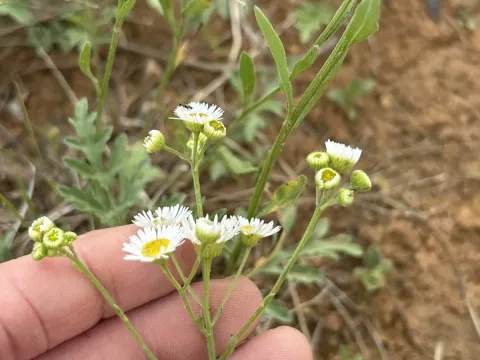
Erigeron strigosus
Erigeron strigosus
Erigeron strigosus is an annual or biennial herbaceous plant that reproduces primarily via seeds. In natural environments, the sowing period occurs in the spring when soil temperatures reach 10-12 degrees Celsius.
What the section contains
Erigeron strigosus
For intentional cultivation, seeds should be sown in well-tilled soil at a depth of no more than 1-2 centimeters. Surface sowing is often more effective due to the small size of the seeds.
Seedlings emerge uniformly if there is sufficient moisture in the topsoil. The plant exhibits high germination energy, allowing it to compete successfully with other species in the pasture during early vegetative stages.
Autumn sowing is only feasible in regions with mild climates where the plant can overwinter in a rosette phase. In temperate zones, a spring cultivation cycle is preferred to prevent freezing damage.
Sowing density is adjusted based on the intended use. For soil stabilization purposes, dense sowing is permitted, whereas seed production requires wider spacing to ensure adequate light exposure.
This species does not have specific soil fertility requirements but prefers well-drained loams or sandy soils. It adapts well to impoverished soils, making it a promising candidate for the phytoremediation of degraded land.
The crop is highly drought-tolerant due to the coarse pubescence on its stems and leaves, which reduces moisture transpiration. This allows the plant to maintain vegetative activity during prolonged dry spells.
Optimal growth is observed in sunny areas exposed to direct ultraviolet radiation. In shaded conditions, the plant tends to stretch, resulting in reduced flowering intensity and lower total biomass production.
The soil pH for Erigeron strigosus should be neutral or slightly acidic. Excessive alkalinity negatively affects nutrient uptake and may lead to leaf chlorosis.
Climate requirements involve providing a moderate thermal regime during the active growth period. The plant can withstand significant daily temperature fluctuations typical of continental climate zones.
The biomass of Erigeron strigosus is formed primarily by branched stems that reach up to 80 centimeters in height. Maximum green mass is achieved during the budding and early flowering phases.
Productivity depends on stand density and agricultural management. Applying minimal nitrogen fertilizer leads to a significant increase in vegetative mass, which is beneficial when using the crop as a green manure.
Harvesting seeds requires caution, as the achenes possess a pappus and are easily dispersed by the wind at maturity. Optimal harvesting occurs when the flower heads turn brown.
Agricultural use is limited to low-quality forage or ornamental landscaping. The high fiber concentration in the stems reduces its palatability for livestock compared to other pasture grasses.
When used in hay mixtures, it provides a stable, though not record-breaking, volume of hay. It is important to monitor its spread to prevent it from reducing the overall nutritional quality of pastures.
Major diseases affecting this species include various forms of powdery mildew, which develop in high humidity. Symptoms appear as a white coating on the leaves, requiring timely fungicide applications.
Pests typical of the Asteraceae family, such as aphids and various plant bugs, may damage the plant's reproductive organs. Massive infestations can significantly decrease seed yields.
Root rots pose a danger in cases of soil waterlogging or standing water in fields. Preventive measures include ensuring good drainage and managing irrigation norms during dry periods.
Viral infections can be transmitted by vectors like thrips or leafhoppers, causing leaf deformation and stunted growth. Controlling the population of these insect vectors is a key protection measure.
- Aphids (Aphididae)
- Powdery mildew (Erysiphales)
- Root rot (Rhizoctonia)
- Thrips (Thysanoptera)
Harvesting seed material is performed mechanically in dry weather to avoid losses due to the high wind-dispersal capacity of the seeds. Using combines with low airflow settings helps maximize seed recovery.
Green mass for silage or hay should be mowed before active seed maturation to prevent uncontrolled spread to adjacent fields. This is critical for integrated weed management.
After mowing, the forage must be dried quickly to prevent mold. Turning the windrows is conducted when the moisture content of the green mass reaches approximately 30-40 percent.
Storage of harvested seeds requires low humidity and good ventilation. Properly stored, Erigeron strigosus seeds maintain high germination rates for up to two or three years.
Plant residues after harvest can be incorporated into the soil as organic fertilizer. This helps enrich the soil with organic matter and improves its physical structure in subsequent seasons.