
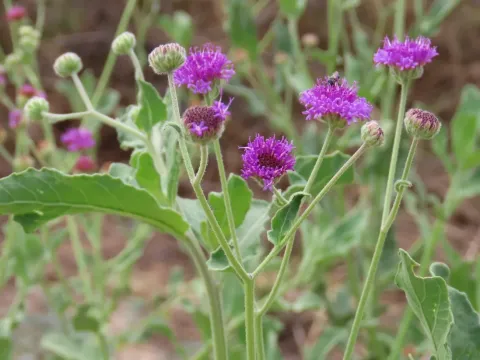
Erlangea
Erlangea
Erlangea is a heat-loving plant, so in temperate climates, sowing should be carried out strictly after the period of spring night frosts has ended.
What the section contains

Erlangea
To ensure early flowering, producers often cultivate seedlings in protected environments or greenhouses, starting from late winter or early spring.
When sowing directly into open ground, the soil must be pre-warmed, and seeds should be placed on the surface as they require light for successful germination.
Maintaining a constant temperature between 20-25 degrees Celsius is crucial during the first two weeks to ensure uniform seedling emergence.
The recommended planting density varies by species, but typically a spacing of 30–40 centimeters is kept to provide adequate airflow and prevent overcrowding.
The crop belongs to the Asteraceae family and is native to tropical regions of Africa, where it thrives in sunny, open locations.
For optimal growth, Erlangea requires loose, well-drained soil with a neutral to slightly acidic pH, rich in organic matter and nutrients.
The plant is highly sensitive to excessive root moisture, so it is essential to avoid areas with poor drainage or potential waterlogging after heavy rainfall.
During the active growth phase, the plant requires regular but moderate irrigation, especially during hot spells, while avoiding the drying out of the root ball.
While Erlangea shows moderate drought tolerance, it needs consistent sunlight and protection from strong, gusty winds to form high-quality flower heads.
The primary use of Erlangea is in landscape design and the floral industry, where it is valued for its decorative, vibrant flower heads.
In commercial cultivation for cut flowers, yield is measured by the quantity and quality of stems, which can reach significant heights under good management.
The prolonged flowering period allows growers to harvest high-quality floral material continuously throughout the summer and autumn seasons.
To increase the marketability of the crop, timely deadheading of spent flower heads is recommended, as this encourages the development of new buds on lateral shoots.
Overall productivity directly depends on the fertility of the substrate and the frequency of applying balanced mineral fertilizers throughout the vegetation cycle.
The main threats to Erlangea include fungal diseases triggered by high humidity and poor soil aeration, such as various types of root rot.
Among common pests, aphids and spider mites can cause significant damage, especially when environmental conditions favor their rapid reproduction.
To prevent disease outbreaks, it is vital to follow crop rotation practices and avoid dense planting patterns that hinder proper air circulation.
If pest infestation occurs, systemic insecticides should be applied according to the manufacturer's safety instructions to minimize crop loss.
Effective phytosanitary control also includes regular weeding, as many weeds act as alternative hosts for various insect pests and pathogens.
Harvesting should be performed in the early morning when the plants are turgid, which ensures maximum post-harvest longevity of the cut flowers.
For storage or transport, stems should be placed immediately into clean water, with lower leaves removed to prevent decay in the container.
The optimal harvest stage for the commercial market is when most of the tiny florets within the flower head have opened, ensuring peak visual appeal.
Tools for harvesting must be sharp and disinfected to prevent mechanical damage to the stems and avoid the introduction of opportunistic infections.
Post-harvest handling involves sorting flower stems by length and bud maturity to create uniform lots for sale to wholesalers or florists.