
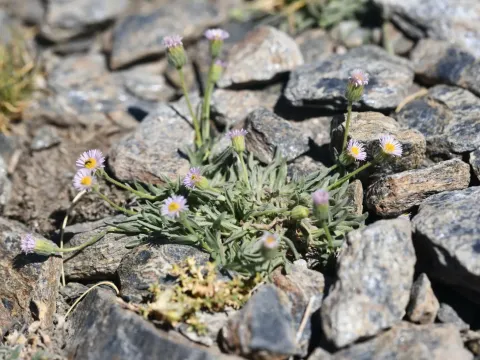
Erigeron major
Erigeron major
Erigeron major is a perennial herbaceous plant belonging to the Asteraceae family. It is native to alpine and mountainous regions, where it has evolved to thrive in soils that are well-drained and relatively nutrient-poor.
What the section contains
Erigeron major
In terms of climate requirements, the plant prefers temperate conditions with ample sunlight. It demonstrates excellent hardiness against frost, making it a reliable choice for gardens in higher latitudes or cooler climates where many other species might struggle.
The soil profile for Erigeron major should ideally be gritty or sandy, ensuring that water does not pool around the roots. While the plant can tolerate some dryness, it performs best when provided with moderate moisture during the active growing season.
Botanically, it features basal rosettes and erect stems carrying flower heads with numerous ray florets. The intricate structure of the flower head is characteristic of the genus, providing a delicate appearance despite the plant's robust nature.
Economically and horticulturally, it is prized as an ornamental species used in rock gardens and herbaceous borders. It is also valued by apiculturists for its ability to attract beneficial pollinators during the blooming stage.
The primary threats to Erigeron major in a garden setting involve fungal pathogens triggered by poor air circulation or waterlogged soil. Root rot is a common issue that can be effectively prevented through proper site selection and soil amendment.
Insects such as aphids and spider mites are frequent pests. These organisms target the foliage and developing buds, often causing stunted growth. Integrated pest management, including the introduction of natural predators or targeted sprays, is recommended for maintaining plant health.