
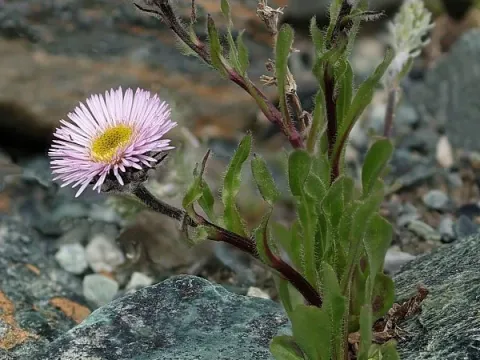
Erigeron neglectus
Erigeron neglectus
Erigeron neglectus is a hardy perennial belonging to the Asteraceae family. Native to the alpine and subalpine zones of the mountains of Southern Europe, it is well-adapted to harsh environments, characterized by rocky, well-drained substrates and intense ultraviolet radiation.
What the section contains
Erigeron neglectus
This species is structurally adapted to survival with a deep root system that anchors the plant firmly in stony soil. Its growth habit is typically low-growing, forming dense mats that help retain moisture and protect the soil from erosion.
From an agronomical perspective, the plant requires full sun exposure to thrive. Shade-grown specimens often exhibit weak stems and a reduced quantity of flower heads, which diminishes their potential for ornamental or landscape usage.
The soil profile must be characterized by high permeability. Heavy clay soils are unsuitable as they induce root hypoxia and facilitate fungal decay. Incorporating grit or sand into the planting site is essential for optimal physiological performance.
Water requirements are moderate; the species is drought-tolerant once established. Irrigation should be applied only during prolonged dry spells, ensuring that the water drains away completely rather than pooling around the plant base.
The primary threat to Erigeron neglectus is root rot caused by stagnant water, often involving Pythium and Phytophthora species. These pathogens proliferate in environments with poor drainage and high soil moisture.
Powdery mildew represents a significant foliar threat, particularly in regions with high humidity or in dense plantings where air circulation is restricted. The white fungal mycelium reduces photosynthetic efficiency.
Aphids constitute the most frequent pest challenge, particularly during the flowering stage. These insects cause sap depletion, which may weaken the plant’s resilience against secondary infections.
Nematode infestations can manifest as stunted growth and yellowing of foliage. Soil testing and the use of healthy propagation material are critical strategies for mitigating these underground pests.
Management of these threats involves the integration of good cultural practices, such as maintaining adequate space between plants to allow for airflow and monitoring for early signs of infestations to prevent outbreaks.