
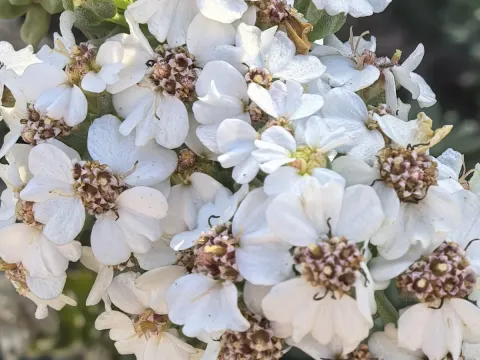
Eriocephalus
Eriocephalus L.
Eriocephalus (Eriocephalus L.) is a genus of evergreen shrubs belonging to the Asteraceae family. Often referred to as "Cape Snow," these plants are native to the arid regions of Southern Africa, where they have evolved to thrive in harsh, water-deficient environments.
What the section contains
Eriocephalus
The successful cultivation of Eriocephalus depends heavily on soil drainage. The plant strictly requires light, well-aerated soil; heavy or clay-rich substrates that retain water pose an immediate risk of root rot and plant mortality.
This crop is a heliophyte, meaning it demands full sunlight exposure to maintain its compact growth form and high concentration of essential oils. Ideally, the plants should be situated in areas that receive at least six to eight hours of direct sunlight daily.
Management practices for this crop involve periodic pruning to encourage dense, bushy growth, which improves the overall harvestable biomass. Fertilization should be moderate, avoiding high nitrogen levels that promote leafy growth at the expense of floral development.
Economically, Eriocephalus is valued for its aromatic essential oils, which are increasingly sought after by the cosmetic and fragrance industries. Its drought tolerance also makes it a sustainable choice for xeriscaping and large-scale landscape agricultural projects.
Fungal pathogens represent the primary threat to Eriocephalus, particularly those triggered by humidity. Root rot, caused by stagnant water, is the most common cause of crop loss and requires careful monitoring of irrigation intervals.
Pest pressure is usually moderate but can escalate in greenhouse environments. Aphids and spider mites are the most common insects that feed on the soft tissues of the shrub, leading to stunted development and leaf discoloration if left unchecked.
Integrated Pest Management (IPM) is highly recommended for this crop. Encouraging natural predators and maintaining proper air circulation through optimal spacing are the most effective non-chemical strategies for reducing pest populations.
Weed management is critical during the establishment phase of the Eriocephalus crop. Because the plant is relatively slow-growing in its early stages, invasive weeds can quickly outcompete it for nutrients and solar radiation, necessitating manual or mechanical intervention.
Crop protection programs should be carefully calibrated to avoid residues that could contaminate the volatile oil extraction process. Therefore, emphasis is placed on proactive horticultural hygiene and optimal environmental conditions rather than heavy chemical use.