
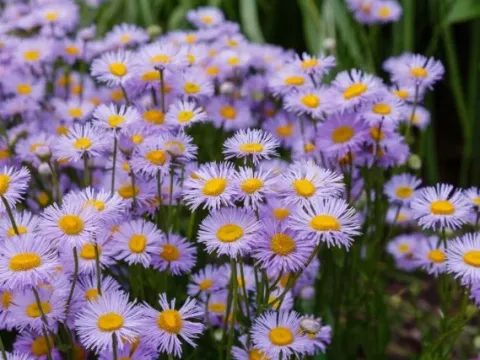
Annual fleabane
Erigeron pseudoannuus
Annual fleabane is characterized by an extremely high reproductive potential, spreading primarily through wind-dispersed seeds. Germination typically begins in early spring, as soon as soil temperatures reach 6–8 degrees Celsius, though it can occur throughout the growing season.
What the section contains
Annual fleabane
In winter crop production, the seeds often germinate in autumn, forming a basal rosette that overwinters successfully. This early establishment gives the weed a competitive advantage over many spring-planted crops.
Effective management requires adjusting sowing dates to ensure that the primary crop emerges and develops rapidly enough to outcompete the weed. Sowing in clean-tilled seedbeds is essential to provide a head start.
Chemical control programs often rely on post-emergence herbicides applied during the rosette stage. Once the plant initiates stem elongation, its physiological resistance to various chemical treatments increases significantly.
Field maintenance involves rotating crops and using mechanical cultivation to disrupt the seedling stage. Deep plowing can bury seeds deep enough to prevent emergence, although the seed bank may remain viable for several seasons.
As a member of the Asteraceae family, annual fleabane is highly adaptable to various edaphic conditions. It thrives in soils ranging from sandy to heavy clay, showing a preference for moderately fertile areas with consistent moisture levels.
The plant is exceptionally hardy and capable of tolerating diverse climatic conditions. It manages well in both full sun and partial shade, making it a persistent inhabitant of field edges and agricultural landscapes.
Annual fleabane requires sufficient nitrogen and phosphorus availability for optimal growth, but it is known to be a competitive scavenger, often outperforming less vigorous crops in nutrient uptake.
Agricultural practices should emphasize soil aeration and regular mechanical weeding in inter-row spaces. Because the plant has a relatively shallow root system, mechanical disturbance is highly effective in controlling young individuals.
In dense crop canopies, annual fleabane growth is significantly suppressed due to light limitation. Maintaining optimal crop density is a critical agronomic strategy to minimize the invasive spread of this species.
Annual fleabane is subject to various fungal infections, particularly powdery mildew, which can significantly inhibit its growth under humid conditions. These pathogens can occasionally limit the plant's spread in agricultural settings.
Insect pests, such as aphids and thrips, frequently colonize the flower heads. While they rarely cause the total destruction of the plant, they can weaken it and reduce its overall seed production capacity.
Root rots caused by excessive soil moisture can also negatively impact the development of the plant, particularly in heavy or poorly drained soils where the plant's metabolic activity is hindered.
The primary threat to the persistence of this weed remains integrated pest management, which combines strategic chemical applications with timely physical removal before the flowering stage.
Field hygiene is paramount; removing weed debris post-harvest prevents the dispersal of mature seeds. Proactive monitoring during the early vegetative phase is the most effective way to prevent large-scale field infestation.