
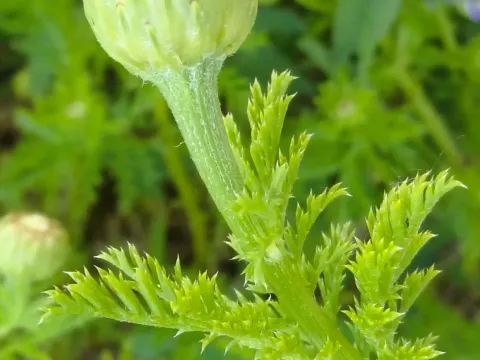
Anthemis auriculata
Anthemis auriculata
Anthemis auriculata, a member of the Asteraceae family, is a botanical species known for its resilience and potential utility in agricultural and medicinal sectors. Its cultivation focuses on maximizing the concentration of active compounds in its floral structures.
What the section contains
Anthemis auriculata
The plant originates from Mediterranean and Western Asian regions, thriving in environments with distinct dry seasons and high solar radiation. It is highly adaptable to various landscapes provided that the drainage remains sufficient to prevent root rot.
When selecting a planting site, farmers should prioritize sandy or loamy soils with excellent water permeability. Anthemis auriculata performs best in full sun, which is critical for the development of robust, essential oil-rich blossoms.
Optimal growth is achieved in soils with a neutral pH, ensuring that micronutrients are readily available for the plant's metabolic processes. It does not require intensive fertilization, though moderate nitrogen application during the vegetative phase can boost overall biomass.
Agricultural management involves mechanical weeding during early development to reduce competition with wild grasses. The plant is considered low-maintenance once it reaches the rosette stage and gains significant foliage cover.
The primary threats to Anthemis auriculata involve fungal diseases such as leaf blight and root rot, which typically occur during periods of prolonged rainfall or in waterlogged field sections.
Pests including aphids and various leaf-eating beetles are common adversaries. Effective management involves regular monitoring and the potential use of biological controls to maintain the crop's pharmacological quality.
Poor soil aeration can lead to stunted growth and increased susceptibility to soil-borne pathogens. Therefore, consistent soil structure management via light tillage is highly recommended for commercial production.
Weed infestation remains the most significant threat during the seedling stage. Implementing a clean fallow or pre-planting herbicide treatment is essential for establishing a healthy, uniform crop density.
Crop rotation protocols should exclude other Asteraceae species to prevent the build-up of host-specific diseases in the soil, ensuring long-term sustainability of the field for this specific crop.