
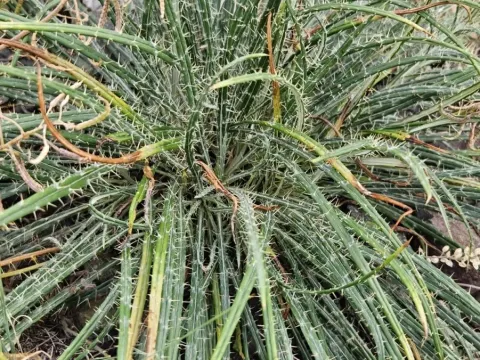
Ancathia
Ancathia
Ancathia is a genus belonging to the Asteraceae family, which is utilized in various agricultural contexts for biomass production and ecological purposes. Proper sowing management is the foundation for a successful harvest and optimal yield development.
What the section contains

Ancathia
Sowing should be performed when the soil temperature consistently reaches 15-18 degrees Celsius. Early planting in cold, wet soil often leads to delayed emergence and increased susceptibility to soil-borne pathogens during the critical seedling stage.
The optimal seeding depth is shallow, usually around 1-2 centimeters. This depth ensures that the seeds have sufficient contact with the soil moisture while allowing the emerging sprouts to reach the surface quickly without depleting their internal reserves.
Drilling the crop in rows with 20-30 centimeter spacing is standard practice for uniform growth. This configuration helps in managing the weed pressure effectively while maintaining an adequate density for maximizing biomass output per hectare.
Post-sowing rolling is highly recommended to improve soil-to-seed contact. This practice promotes rapid water movement to the germinating seeds, ensuring even stand establishment across the entire field, which is vital for standardized management practices.
The crop thrives in well-drained, sandy loam soils rich in organic matter. It exhibits a high degree of adaptability to various environmental conditions but performs best when provided with adequate sun exposure and moderate water availability throughout its lifecycle.
Soil pH management is crucial for nutrient availability. Ancathia prefers neutral to slightly alkaline soil conditions. If the soil is too acidic, liming should be performed well in advance of the planting season to improve overall plant health and nutrient uptake efficiency.
Maintaining proper aeration in the root zone is necessary for vigorous growth. Compacted soils should be deep-tilled prior to planting to ensure that root systems can penetrate deeply and access deep moisture, which acts as a buffer during periods of light drought.
Nutrient requirements are moderate, focusing on potassium and phosphorus for structural strength and energy transport. Nitrogen should be applied judiciously, especially during the vegetative growth phase, to avoid excessive leaf growth at the expense of root or reproductive development.
While the plant is hardy, it requires protection from severe waterlogging. Implementing field drainage systems is essential in areas prone to heavy precipitation to prevent root rot and ensure that the plants have consistent access to necessary oxygen in the soil.
Fungal diseases are the primary threats, particularly in humid and warm climates. Powdery mildew and various leaf spot fungi can significantly reduce the photosynthetic capacity of the crop, leading to diminished yields if not addressed promptly.
Insect pests such as aphids and leaf-chewing larvae can cause substantial damage in the early development stages. Integrated Pest Management (IPM) strategies, including biological control and targeted use of insecticides, are vital for maintaining crop integrity.
Root rot, often caused by over-irrigation or poor soil drainage, can compromise the stability of the crop. Crop rotation remains the best preventative measure to break the life cycles of soil-borne pathogens and maintain long-term field productivity.
Weed management during the first few weeks after emergence is critical. Since Ancathia seedlings may grow slowly initially, they can be easily outcompeted by aggressive weeds, requiring mechanical cultivation or appropriate herbicide application to ensure a clean start.
Field scouting should be a routine practice throughout the season. Identifying pest hotspots or early signs of disease infection early on is essential to prevent rapid spread across the field, minimizing the need for large-scale chemical interventions.