
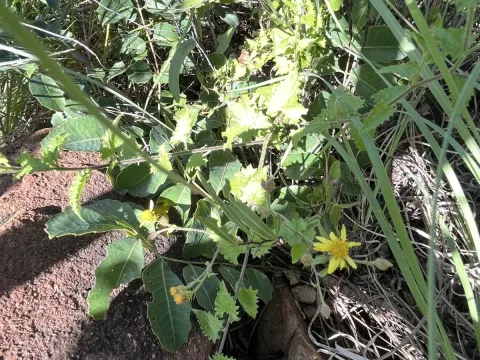
Anisopappus
Anisopappus
Anisopappus is a genus in the Asteraceae family that typically thrives in warm climates. For successful cultivation, sowing should occur after all danger of frost has passed, ensuring the soil temperature is sufficiently warm to promote seed germination.
What the section contains

Anisopappus
Seeds are usually sown at a shallow depth of approximately 1 to 2 centimeters. Because the seeds are relatively small, it is essential to ensure they remain in contact with moist soil without being buried too deeply, which could inhibit emergence.
Row spacing should be maintained at 50 to 60 centimeters to allow for proper air circulation and to facilitate weed management between rows. This spacing is also beneficial for the development of individual plants, preventing excessive competition for resources.
In preparation for sowing, the soil should be tilled to a fine tilth. Removing weeds is vital during the early establishment phase, as the young seedlings of Anisopappus grow slowly and can be easily outcompeted by more aggressive vegetation.
Uniform soil moisture must be provided during the first few weeks after sowing. Drip irrigation systems are highly recommended to provide consistent water supply directly to the root zone without creating excess moisture on the foliage.
Anisopappus requires full sun exposure to achieve its full growth potential. While it exhibits some tolerance to varying light conditions, limited sunlight significantly impacts biomass production and the overall development of the plant.
Well-drained soil is the most critical requirement for this crop. It is susceptible to root diseases if kept in waterlogged conditions, making sandy loam or well-structured soils the ideal choice for successful field production.
The plant performs best within a temperature range of 22 to 28 degrees Celsius. While it is hardy in its native subtropical habitats, it does not tolerate freezing temperatures, which can cause severe damage or death to the plant tissue.
A neutral soil pH, typically between 6.0 and 7.5, is optimal for nutrient uptake. Soil testing prior to planting is recommended to determine the need for nutrient amendments or pH adjustments to ensure the best growing conditions.
Regular maintenance involves keeping the field free of invasive weeds and ensuring the soil surface is kept loose. Frequent mechanical cultivation between rows helps improve oxygen availability to the roots, stimulating more robust overall growth.
Fungal pathogens such as powdery mildew represent a significant threat to Anisopappus, particularly in humid environments with poor air circulation. Implementing preventative management strategies is key to avoiding yield losses from these diseases.
Aphids and spider mites are common pests that may infest Anisopappus plants. These pests feed on the sap, leading to stunted growth and leaf discoloration, requiring early intervention with either biological controls or appropriate pesticide applications.
Root rot is a constant threat in poorly drained soils. The disease is often exacerbated by over-irrigation or periods of prolonged rainfall, emphasizing the need for proper landscape design and drainage management in the field.
Cutworms can cause substantial damage in the early stages of plant development by feeding on the seedling stems. Crop monitoring and the use of physical barriers or targeted treatments are recommended to protect the young crop.
Crop rotation is an essential agronomic practice to manage the buildup of soil-borne diseases. Avoiding the planting of Anisopappus in fields previously occupied by other susceptible Asteraceae species is a standard best practice for long-term production.