
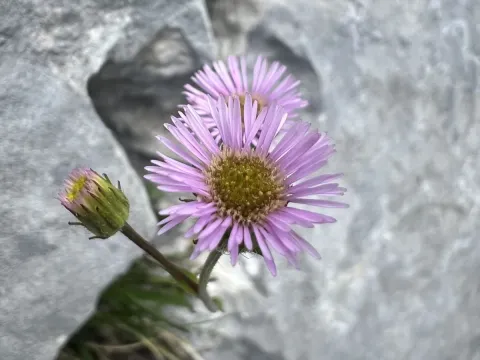
Erigeron glabratus
Erigeron glabratus
Sowing seeds of Erigeron glabratus under cultivation conditions is typically carried out in the spring, in March or April, when using the seedling method. This allows the plant to grow stronger before the onset of the full summer season.
What the section contains
Erigeron glabratus
With direct seeding, seeds are sown directly into open ground in May, once the risk of late frosts has passed. The planting depth should be minimal, as the seeds are small and require light for germination.
For optimal germination, the soil must be well-moistened, and the air temperature should be maintained at 18–20 degrees Celsius. The first shoots usually appear two to three weeks after sowing.
When growing for commercial or ornamental purposes, it is necessary to maintain a distance between plants, leaving about 30–40 centimeters for the full development of the root system.
Winter sowing is also possible in the fall, which allows for natural seed stratification, contributing to more uniform and vigorous emergence at the beginning of the following season.
Erigeron glabratus, belonging to the Asteraceae family, prefers well-lit areas. The plant is highly light-loving, and in shaded conditions, the stems may grow excessively thin and long.
The crop is quite demanding regarding soil conditions; plants develop best in light, well-drained loams or sandy soils with a neutral pH level.
The plant tolerates moderate moisture well but categorically does not tolerate water stagnation in the root zone. A high humus content in the soil contributes to more abundant and prolonged flowering.
In terms of climate, this species is characterized by high winter hardiness. It is adapted to temperate climate conditions and is capable of withstanding significant temperature fluctuations.
Agrotechnics require timely loosening of row spacing to ensure oxygen access to the roots, as well as the removal of weeds that may compete for nutrients.
The main threat to this plant species comes from fungal diseases that arise due to waterlogged soil or poor aeration of the site.
Powdery mildew and various types of leaf spot are the most common issues, affecting the plant's vegetative mass and reducing its aesthetic value.
Among pests, aphids and spider mites are notable as they feed on the sap of the leaves. Preventive treatments with systemic insecticides help minimize damage.
In dense planting conditions, plants are susceptible to rot, so it is crucial to adhere to planting density standards and ensure proper soil drainage.
Regular inspection of plantings allows for the early detection of infection spots and local fungicide treatment, which prevents the disease from spreading throughout the entire plot.