
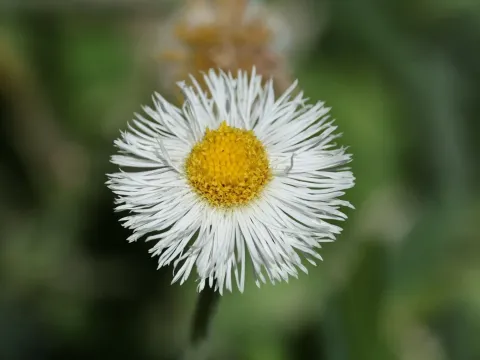
Erigeron longipes
Erigeron longipes
Erigeron longipes, commonly known as long-stalk fleabane, is a perennial flowering plant belonging to the Asteraceae family. Native to the mountainous regions of North America, it is adapted to rocky substrates and alpine conditions.
What the section contains
Erigeron longipes
The plant exhibits a robust structure, characterized by basal rosettes and erect stems covered in fine hairs. This pubescence serves as a crucial adaptation to regulate water loss, allowing the plant to thrive in exposed, windy environments.
The primary soil requirement for successful cultivation is excellent drainage. The species prefers sandy or gritty soil textures that mimic its natural habitat. It performs poorly in heavy, water-retentive clay soils, which can lead to root degradation.
Regarding climate, Erigeron longipes is well-suited to temperate zones with distinct seasons. It thrives in full sunlight, which promotes compact growth and abundant flowering. While cold-tolerant, it requires protection from excessive winter moisture in colder regions.
In terms of practical application, this species is highly valued in horticulture for rock gardens and naturalistic plantings. Its ability to tolerate harsh site conditions makes it a low-maintenance choice for sustainable landscaping projects.
Like many species in the Asteraceae family, Erigeron longipes is susceptible to powdery mildew when planted in stagnant air conditions. Proper spacing is essential to ensure adequate airflow and reduce humidity around the foliage.
Root rot caused by Phytophthora species poses a significant risk to the plant's longevity, particularly in poorly drained soils. Avoiding overhead irrigation during cooler days and ensuring soil porosity are key preventative measures.
Aphids are the most common insect pests that infest the flower buds and young shoots. If a localized outbreak occurs, biological control agents such as ladybugs or insecticidal soaps can be utilized to minimize environmental impact.
Spider mites can become a nuisance during hot, dry summer months, leading to leaf discoloration and weakened plants. Regular inspection of the undersides of leaves helps in early detection and intervention.
Maintenance of healthy plants relies on a clean growing environment. Removing dead foliage at the end of the growing season prevents the accumulation of pathogens that could potentially overwinter and infect the crop in the spring.