
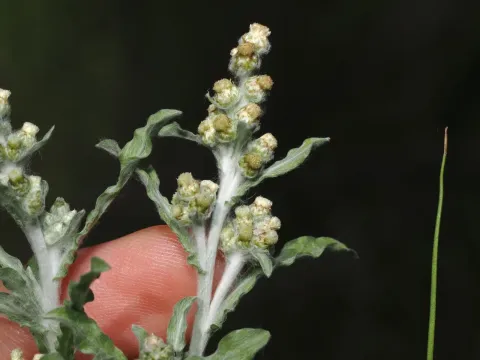
Gnaphalium polycaulon
Gnaphalium polycaulon
Seeds of Gnaphalium polycaulon are sown in early spring once the soil temperature reaches 10–12 degrees Celsius. It is crucial to sow them very close to the surface because the seeds are extremely small.
What the section contains
Gnaphalium polycaulon
Mid-April is considered the ideal time for sowing, as it ensures sufficient soil moisture levels. Row sowing with 30–40 cm spacing is recommended to maximize light exposure for the seedlings.
Fields must be free of perennial weeds prior to planting. Since this species grows slowly in its early stages, keeping the plot clean is vital for successful crop establishment.
Cold stratification of seeds can improve germination rates before sowing. Seedlings usually emerge within 14–20 days, provided that the topsoil remains consistently moist during the germination period.
In commercial operations, high-density sowing followed by thinning is a standard practice. This approach allows for optimal spacing and ensures that every plant has enough room to develop properly.
As a member of the Asteraceae family, Gnaphalium polycaulon thrives in open, sunny locations. High levels of solar radiation are essential for the synthesis of its biologically active compounds.
The crop performs best on light, sandy or loamy soils with a neutral or slightly acidic pH. Heavy clay soils that retain excess water are unsuitable as they can easily damage the root system.
The plant is moderately drought-tolerant; however, it requires regular irrigation during the stem elongation phase. Avoiding waterlogging is critical to prevent root diseases during the growth cycle.
Optimal temperatures for vegetative growth range between 20 and 25 degrees Celsius. Extreme temperature fluctuations can lead to premature flowering and a decrease in the total vegetative mass.
Balanced soil fertility, specifically nitrogen and potassium levels, is key for stable growth. Organic fertilizers applied to the previous crop often provide the best results for this medicinal herb.
The yield of Gnaphalium polycaulon biomass depends on soil fertility and plant density. On average, farmers can expect a harvest of 1.5 to 3 tons of dried raw material per hectare.
The highest concentration of medicinal components occurs at the beginning of the full flowering phase. Harvesting at exactly this time ensures the best quality and potency of the final product.
Effective weed management during the first two months is crucial to maintain high yields. Mechanical weeding between rows can significantly boost the growth rate of the harvestable biomass.
Intensive farming techniques, including appropriate fertilization, can increase yield by 20–30 percent. Excessive nitrogen should be avoided to prevent lodging and maintain the plant's health.
Collecting seeds for future production requires care due to their wind-dispersal nature. With proper techniques, seed yield can reach 50–80 kilograms per hectare.
Fungal diseases are the primary threat, especially in humid conditions. Powdery mildew can quickly affect dense crops, significantly lowering the commercial value of the harvested material.
Root rot is another common issue if drainage requirements are not met. If left unmanaged, these disease patches can spread rapidly throughout the field during the growing season.
Pests like aphids and spider mites may attack young leaves, draining the plant of its sap. This weakens the crop and makes it more susceptible to environmental stressors.
Competition from weeds during the germination phase is a critical bottleneck. Failure to control weeds can result in significant loss of crop vigor or even complete crop failure.
To minimize these risks, farmers should practice proper crop rotation and use certified, high-quality seeds. Preventive application of bio-fungicides is an effective way to manage pathogens.
Harvesting is carried out during the peak flowering stage. The entire above-ground part is mowed 3–5 centimeters above the soil level using specialized agricultural machinery.
Once harvested, the material must be transported to the drying facility immediately. Leaving it in windrows under direct sunlight for too long causes the loss of valuable essential oils.
Drying is performed in shaded, well-ventilated areas or in temperature-controlled chambers. The temperature should not exceed 40 degrees Celsius to preserve the medicinal properties.
After drying, the raw material is cleaned of impurities and soil residues. The final product should have a uniform color and the characteristic aroma associated with this species.
Dried products must be stored in dry, dark warehouses using breathable packaging. Proper storage is essential to prevent moisture absorption and subsequent mold development.