
Goat's-beard
Tragopogon lamottei
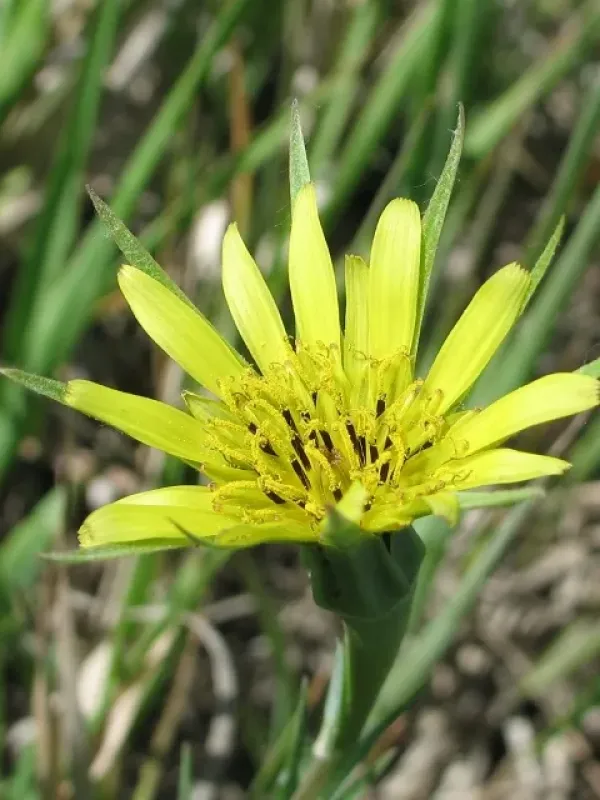
Description
Sowing dates
Tragopogon lamottei belongs to the Asteraceae family. It is a biennial herbaceous plant, which is increasingly viewed in agricultural practice as a promising candidate for introduction in arid regions.
Sowing of this crop is recommended in late autumn or early spring when the soil reaches physical maturity. The optimal sowing depth is 1.5–2 cm, as small seeds require consistent contact with moist soil layers for uniform germination.
During spring sowing, it is critical to ensure proper soil packing, which facilitates capillary moisture rise toward the seed bed. Seedlings typically emerge 10–14 days after sowing, depending on the ambient temperature.
The sowing pattern depends on the intended use: for green fodder, a row spacing of 15–20 cm is applied. If seed production is intended, a wide-row method with up to 45 cm between rows is recommended to improve airflow around the plants.
The crop is characterized by high seed germination energy, allowing for the rapid formation of dense vegetation. It is essential to manage weed control, as the plant is sensitive to competition during its initial growth phases.
Growing requirements
Tragopogon lamottei exhibits strong xerophytic traits, making it drought-tolerant and resilient in arid conditions. It thrives in well-lit areas, preferring open spaces without shading.
The plant does not have excessive soil requirements, though optimal productivity is achieved in light sandy loam or loamy soils with a neutral pH. The crop performs poorly in waterlogged or acidic, heavy substrates.
The optimal temperature range for active vegetation is 18–22°C. Mature plants possess high cold tolerance, allowing them to successfully survive winter temperatures in temperate climate zones.
Proper root system aeration is a vital requirement. For crops grown on dense soils, regular inter-row cultivation is necessary to prevent soil crusting and improve gas exchange.
Mineral nutrition should be balanced: the crop responds well to phosphorus and potassium fertilizers, which strengthen plant immunity and promote the accumulation of nutrients in the taproots.
Yield
The agricultural use of Tragopogon lamottei is primarily associated with its valuable fodder qualities. Its young shoots and leaves are rich in protein and vitamins, making them suitable for livestock feed.
In culinary applications, the plant's taproots are used, which resemble oyster root or salsify in taste. They contain inulin, making the crop a valuable dietary product.
Green mass yield depends directly on the level of agronomy and precipitation levels during the spring-summer period. With adherence to requirements, two full cuts per growing season are possible.
The mass of taproots can reach significant levels under intensive management, allowing the plant to be considered a viable commodity for specialized vegetable markets.
The biological potential of the species allows for stable yields even on degraded soils, where other agricultural crops may exhibit poor productivity.
Main diseases and pests
The primary threat to this crop comes from fungal diseases that develop under high humidity. Among them, powdery mildew is the most common, affecting the leaf apparatus and reducing photosynthetic activity.
Rust may affect plants in the second half of the growing season, manifesting as characteristic brown spots on the leaves. Preventive spraying with copper-based fungicides is recommended for control.
Among pests, aphids and various species of weevils cause the most damage. Aphids suck juices from young leaves, causing deformation and suppressing overall plant development during the rosette phase.
Soil pests, such as wireworms, can damage the root system during the initial growth period. Agrotechnical methods, including deep autumn plowing and crop rotation, are effective preventive measures.
Slugs can cause damage to crops in wet years by feeding on tender leaf edges. Control measures include maintaining clean rows and using traps or specific baits during mass outbreaks.
Harvesting
Harvesting for green fodder should be performed before the flowering phase, when the concentration of nutrients in the aerial part reaches its peak. During this period, the stems remain tender and highly palatable to livestock.
When grown for taproots, harvest is conducted in autumn after the end of the growing season, when the aerial parts begin to yellow. Work should be performed carefully to avoid damaging the root skin for long-term storage.
After digging, the roots should be cleaned of soil, dried in the shade, and stored in a cool, well-ventilated area. The optimal storage temperature is +2...+4°C.
Seed material is harvested as the achenes ripen. Given that the seeds have pappi and shatter easily, collection is carried out selectively or in the wax ripeness stage, before the flower heads dry completely.
Post-harvest processing includes cleaning seeds of plant debris and grading them. Seed viability is maintained for up to 3–4 years if stored correctly in paper or cloth bags.