
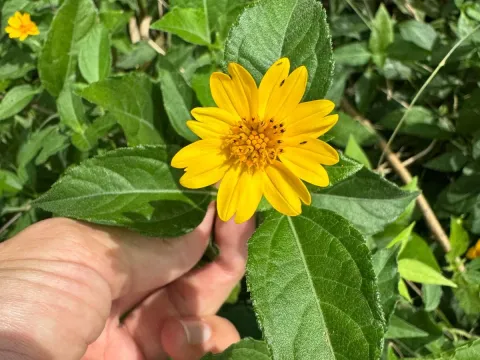
Wedelia latifolia
Wedelia latifolia
Wedelia latifolia is primarily propagated through vegetative cuttings, which is the most reliable method for establishing large-scale plantings. The optimal planting period coincides with the beginning of the wet season or warm months, ensuring the soil remains sufficiently moist for rapid root development.
What the section contains
Wedelia latifolia
When using seeds, they should be sown in prepared nursery containers under protected conditions approximately six weeks before transplanting. A steady temperature of 22–25 degrees Celsius is required for consistent germination and seedling vigor.
Site preparation involves deep tillage and the incorporation of organic matter to support vigorous growth. A planting density of 4–6 plants per square meter is usually recommended to establish a dense vegetative cover as quickly as possible.
Young plants require consistent irrigation for the first few weeks until the root system is well-established. Once rooted, the plant demonstrates significant resilience to various environmental stressors.
Maintaining a row spacing of 30–40 cm facilitates easier management and mechanized harvesting of the green mass as the plant matures.
Wedelia latifolia is a perennial herbaceous plant belonging to the Asteraceae family, well-known for its vigorous growth habit. It thrives in full sun but maintains reasonable productivity in partial shade, making it adaptable to various site conditions.
The plant requires fertile, well-drained soil with a neutral to slightly acidic pH. Poor drainage or waterlogged soils should be avoided as they can lead to root system issues and stunted growth.
As a tropical plant, it is strictly non-frost hardy and requires temperatures between 20 and 30 degrees Celsius for optimal metabolic activity. It cannot survive freezing temperatures, which restricts its cultivation to warmer climates.
Irrigation is crucial during dry spells to maintain leaf turgor and biomass production. Adequate moisture levels are directly linked to the plant's ability to regenerate quickly after repeated harvesting cycles.
Fertilization with nitrogen-based nutrients during the active growing season promotes rapid development of the foliage, which is essential for maximizing yields in forage production systems.
The agricultural value of Wedelia latifolia lies in its ability to produce significant amounts of nutritious green mass, often used as forage for livestock. Under ideal management, the crop can support multiple harvests within a single growing season.
Yield potential is largely determined by the amount of solar radiation and the availability of essential nutrients in the root zone. High biomass output makes it an efficient crop for sustainable forage systems.
The plant possesses a high capacity for regeneration after cutting, allowing for multiple years of harvesting without the need for constant replanting. Maintaining soil fertility is key to sustaining these yields over time.
The plant’s ability to outcompete common weeds by forming a thick ground cover significantly reduces labor costs associated with weeding and site maintenance. This efficiency contributes to the crop's overall economic feasibility.
The chemical profile of the biomass includes substantial protein content, providing a vital feed source in regions where traditional forage crops may be difficult to produce.
Fungal diseases are the primary threat, especially in conditions of high humidity or poor air circulation within the canopy. Leaf spot infections can compromise the quality and nutritional value of the harvested biomass.
Insect pests, such as aphids and spider mites, are common nuisances that feed on plant sap and can retard growth if populations remain unchecked. Regular monitoring is essential for identifying infestations early.
Root rot is typically associated with poor drainage or excessive irrigation practices. Ensuring a well-draining soil profile is the most effective preventative measure against these soil-borne pathogens.
When chemical interventions are necessary, only registered pesticides or fungicides should be used, with strict adherence to safety periods before harvesting for animal consumption.
- Regular phytosanitary monitoring of the entire crop area.
- Immediate removal and disposal of infected plant material.
- Implementation of crop rotation to prevent the buildup of soil pathogens.