
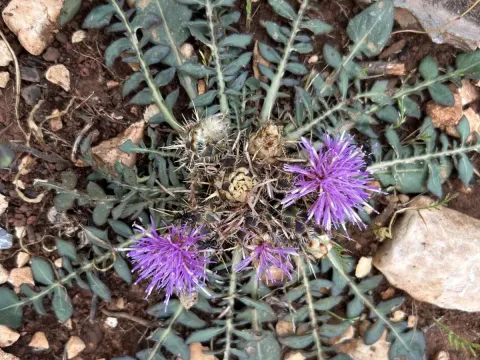
Centaurea raphanina
Centaurea raphanina
Centaurea raphanina, commonly known in its native range as a type of edible thistle or wild chicory, is a perennial herbaceous plant belonging to the Asteraceae family. In the wild, the plant spreads through seeds that typically germinate during the cooler, wetter months of the Mediterranean autumn.
What the section contains
Centaurea raphanina
For agricultural cultivation, seeds are sown in early spring or autumn. To ensure optimal germination, the seeds often require a period of stratification. The sowing depth should be maintained at approximately 1 to 2 centimeters to allow for adequate oxygen exposure for the emerging embryo.
Spacing is a critical factor for crop development. Plants require enough room to expand their basal rosette, which is the primary harvestable part of the plant. Overcrowding can lead to stunted development and increased susceptibility to fungal diseases.
Water management is crucial immediately after sowing. The substrate must remain consistently moist to ensure the survival of the young seedlings until they establish a sturdy taproot. Once established, the plant becomes increasingly resilient to drought conditions.
Growth rate significantly accelerates once the plant reaches the rosette stage. Maintaining clean rows free of competing weeds during this phase is essential for maximizing biomass and ensuring the high quality of the edible leaves.
The species is native to Mediterranean regions, meaning it thrives under intense sunlight and requires high light intensity throughout its growth cycle. It is highly adapted to arid and semi-arid environments, making it a potentially low-input crop.
Soil requirements are relatively specific: the plant prefers well-drained, porous soils, such as limestone or stony grounds. Any waterlogging in the root zone is detrimental, as it encourages the development of root rot and other moisture-related pathogens.
The plant is not nutrient-demanding. Over-fertilization, especially with high levels of nitrogen, can negatively affect the flavor profile and the accumulation of beneficial phytonutrients, which are the main reasons for its culinary value.
Temperature regulation is largely governed by the plant's natural adaptation to the Mediterranean climate. It prefers cool winters and warm summers, although it can handle significant heat if the root zone is sufficiently ventilated.
Cultural practices should focus on maintaining a porous soil structure through occasional inter-row cultivation. This promotes root health and prevents the soil crusting that can occur after heavy rainfall or inadequate irrigation.
The most significant threat to Centaurea raphanina in an agricultural setting is fungal infection, particularly under conditions of poor drainage or high humidity. Root rot and leaf spot are common manifestations of these pathogens.
Insect pests such as aphids can colonize the young, tender leaves of the rosette. Monitoring for early signs of infestation is necessary to prevent widespread damage, which can lead to reduced yield and poor leaf quality for market sale.
Integrated Pest Management (IPM) is the preferred strategy. This involves the use of biological control agents and botanical extracts rather than synthetic pesticides, given the crop's use as a food source in various traditional cuisines.
Crop rotation is essential to prevent the buildup of soil-borne diseases. Avoiding fields previously planted with other Asteraceae species is a standard agronomic practice to maintain soil health for this specific crop.
In cases of severe infection, immediate rogueing (removal) of affected plants is required. This practice limits the spread of spores and ensures that the overall integrity of the field is maintained until the time of harvest.