
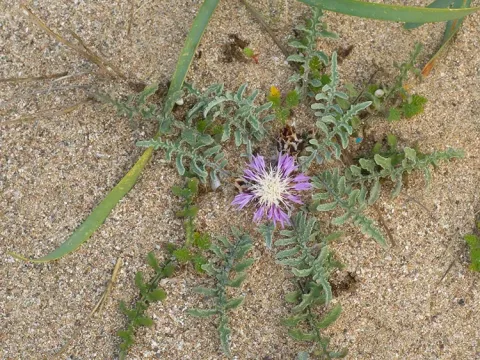
Centaurea pumilio
Centaurea pumilio
Centaurea pumilio is a perennial herbaceous plant belonging to the Asteraceae family. It is a highly specialized species adapted to the harsh conditions of coastal sand dunes and arid Mediterranean environments.
What the section contains
Centaurea pumilio
The plant originates from the Eastern Mediterranean region, specifically inhabiting coastal areas with sandy substrates. Its biological structure is designed to minimize water loss and endure intense solar radiation.
The primary requirement for this crop is a well-drained, sandy soil composition. It is fundamentally ill-suited for heavy, moisture-retaining soils that restrict oxygen access to the root system and promote decay.
Centaurea pumilio thrives in full sun exposure. In an agricultural setting, it requires open space with no shading from trees or surrounding vegetation to maintain its compact growth habit and healthy metabolism.
Regarding agrotechnical maintenance, the plant requires very low inputs. It is naturally equipped to handle poor soil nutrient profiles, making it a sustainable choice for xeriscaping or specialized sand-based cultivation environments.
The most significant threat to the health of Centaurea pumilio is waterlogging. Excess moisture quickly triggers root rot and fungal infections, which are the primary causes of mortality in non-natural habitats.
High relative humidity combined with poor air circulation can lead to the development of powdery mildew on the leaf surfaces. Ensuring optimal spacing between plants is crucial for managing humidity levels.
Pests such as aphids and spider mites can infest the plant, particularly during dry spells. These pests weaken the host by extracting sap from the tender parts of the stems and flower buds.
Competition from invasive weeds can severely impact the survival rate of young seedlings. As a slow-growing species, it struggles to compete for sunlight and nutrients when overgrown by aggressive grasses.
To mitigate these threats, agronomists recommend maintaining a dry environment around the base of the plant. Monitoring for early signs of infestation and ensuring proper drainage remain the most effective preventive strategies.