
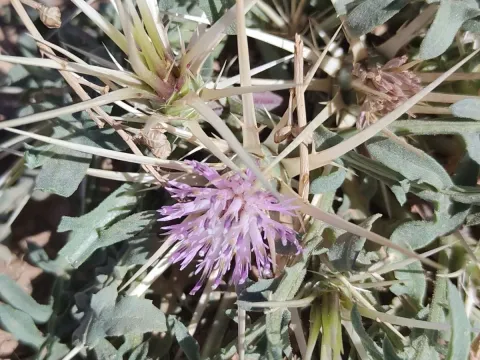
Centaurea pungens
Centaurea pungens
Centaurea pungens belongs to the Asteraceae family and is recognized for its adaptation to arid environments. As a perennial plant, it requires specific conditions for successful establishment from seed.
What the section contains
Centaurea pungens
Sowing should ideally occur in early spring once the soil temperature is consistently above 10 degrees Celsius. Seeds are sown at a depth of 1.5 to 2 centimeters to ensure protection while allowing for easy emergence.
Row spacing should be maintained between 45 and 60 centimeters. This distance prevents competition between plants and allows for optimal development of the root system and foliage.
Autumn sowing is also feasible in certain climates, as it subjects the seeds to natural stratification. This technique often leads to improved germination rates during the following spring season.
Seedbed preparation is vital; the site must be free from perennial weeds to ensure the young Centaurea seedlings are not outcompeted during their initial growth phase.
Centaurea pungens thrives in full sun and requires high light intensity for optimal growth. Shaded areas are unsuitable and lead to weak, elongated stems that lack structural integrity.
The plant prefers well-draining, sandy or loamy soils. Soil aeration is critical, as stagnant water will quickly damage the deep taproot and lead to crown rot issues in the plants.
A neutral soil pH is ideal for the species. It is remarkably resilient to drought once established, making it a suitable candidate for marginal lands where other crops struggle with water deficiency.
While the plant is hardy, it benefits from moderate fertilization in the early stages. Excess nitrogen should be avoided as it encourages vegetative growth at the expense of flower production.
The species is highly heat-tolerant, which makes it well-suited for cultivation in dry steppe regions. It withstands high daytime temperatures and significant diurnal thermal variations.
The yield of Centaurea pungens is largely determined by the rainfall patterns during the spring. In good growing years, biomass production is consistent, providing a reliable source of raw material.
Harvesting for seeds involves collecting the dried flower heads once they reach full maturity. Because of the prickly bracts, protective equipment is necessary for manual handling during the harvest.
The plant is utilized for its potential pharmaceutical compounds and as a decorative dried flower component. Its flowering period typically spans the mid-to-late summer months.
Peak yields are generally achieved in the second or third year of growth. At this stage, the plant has established its maximum reproductive and vegetative capacity within the field.
Economic success in cultivating this species relies on maintaining a healthy plant population density and ensuring the site remains free from invasive weed species throughout the lifecycle.
Root rot is the most significant threat, typically caused by excess moisture or poor soil drainage. Maintaining dry, airy conditions is the primary strategy for prevention.
Pests like aphids can occasionally infest the plant during the budding phase. If the infestation is light, it rarely impacts the overall survival of the crop, but monitoring is recommended.
Powdery mildew may occur if planting density is too high, preventing adequate airflow. Thinning out the plants and selecting well-ventilated fields are effective ways to mitigate this risk.
Weeds are the primary competitor during the early life cycle of the plants. Regular cultivation between rows is essential to suppress weed encroachment and promote oxygen exchange.
While chemical treatments exist, they are often unnecessary if good agricultural practices are followed. Biological control or mechanical removal is generally preferred for this hardy species.
Harvesting the aerial parts should be performed during full bloom to ensure the concentration of plant secondary metabolites is at its highest level for potential medicinal use.
Immediately after harvesting, the material should be transported to a drying facility. Timely processing is crucial to avoid degradation of the volatile oils contained within the plant tissues.
Drying should be carried out in a darkened, ventilated area at temperatures below 45 degrees Celsius. Exposing the harvested crop to direct sunlight during drying is strictly discouraged.
Once fully dried, the material must be stored in moisture-proof containers in a cool, dark environment. Proper storage preserves the quality of the harvested crop for up to two years.
Post-harvest residues can be effectively managed by chopping them into the field, where they serve as organic matter, improving the soil structure for future planting cycles.