
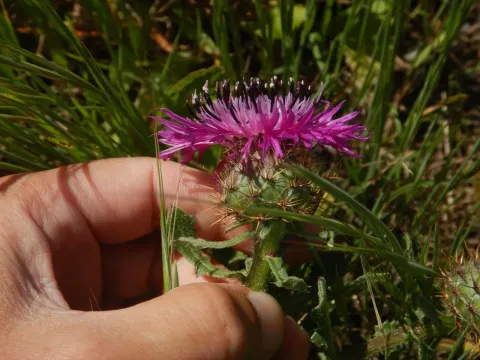
Centaurea polyacantha
Centaurea polyacantha
Centaurea polyacantha is a member of the Asteraceae family, valued for its unique botanical traits and potential uses in agricultural and pharmacological sectors. As a perennial plant, it requires specific management to ensure consistent development.
What the section contains
Centaurea polyacantha
The sowing process typically takes place in early spring once the risk of heavy frost has subsided. Seeds should be sown at a shallow depth of 1-2 centimeters to ensure adequate exposure to light, which triggers the germination process.
Precision seeding is highly recommended to maintain proper spacing, typically 50 centimeters between rows. This spacing prevents overcrowding, which is a major factor in reducing competition for nutrients and water among the young plants.
In regions with mild winters, autumn sowing can be performed, which allows the seeds to undergo natural stratification, leading to more uniform germination when the spring temperatures rise above 10 degrees Celsius.
Post-emergence maintenance includes thinning the rows to ensure that each individual plant has enough room to establish its root system. A healthy starting population is essential for a productive harvest cycle later in the season.
This crop thrives in sunny locations with well-drained, porous soils. It is highly adapted to arid environments and performs best when planted in sandy or rocky soils that prevent waterlogging and root rot.
Soil pH levels should ideally range between 6.5 and 7.5. Centaurea polyacantha is sensitive to overly acidic conditions, and soil testing before planting is a recommended practice for all commercial growers.
Water requirements are relatively low after the plants are established. However, supplemental irrigation during the peak flowering stage can significantly increase the total biomass and the concentration of useful secondary metabolites.
Proper ventilation is crucial for this species. When planted in areas with stagnant air or high humidity, the plants become susceptible to fungal infections that can rapidly spread throughout the field if left unmanaged.
Balanced fertilization with a focus on phosphorus and potassium encourages stronger stem growth and better tolerance to environmental stressors, such as strong winds or sudden temperature shifts.
Root rot is the most significant threat to Centaurea polyacantha, especially in soils with poor drainage. Management involves ensuring optimal soil aeration and avoiding excess irrigation during the dormant phase.
Aphids are frequent pests that target the young buds and flowers. Using integrated pest management techniques, such as encouraging natural predators like ladybugs, is often more effective than traditional chemical treatments.
Powdery mildew may develop during periods of high humidity and cool nights. Thinning the canopy and ensuring proper light penetration into the center of the plants is the primary strategy for prevention.
Leaf-eating insects can cause significant damage to the plant's photosynthetic surface. Monitoring the field weekly during the rapid growth phase allows for early intervention and targeted treatment before the damage becomes economic.
Strict hygiene in the field, including the removal of infected plant debris after harvest, helps to break the life cycle of soil-borne pathogens and ensures a healthy crop in the following seasons.
Harvesting usually takes place during the full bloom stage when the concentration of essential active compounds is at its peak. The flowers are gathered by hand or using specialized equipment to preserve their integrity.
Timing is critical; harvesting should occur on a dry day, preferably mid-morning after the dew has evaporated. This prevents moisture-related spoilage during the drying or storage process.
For seed production, the flower heads are left on the plant until they are fully mature and turn brown. They must be collected before they open naturally to disperse the seeds on the ground.
Post-harvest handling involves drying the raw material in a shaded, well-ventilated area to maintain its quality and color. High temperatures during drying should be avoided to prevent the degradation of volatile components.
Proper storage in cool, dry conditions with controlled humidity ensures the longevity of the harvested material, making it suitable for subsequent processing or industrial application.