
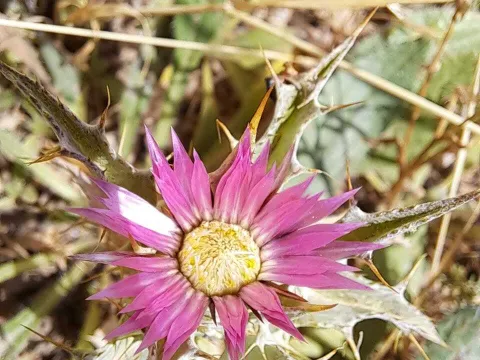
Carlina lanata
Carlina lanata
Carlina lanata is an annual herbaceous plant that requires careful soil preparation before sowing. The optimal sowing time is early spring once the soil has warmed up to at least 10 degrees Celsius.
What the section contains
Carlina lanata
The seeds should be sown in prepared rows, maintaining a spacing of approximately 45-50 cm between rows to ensure sufficient space for the plant's development.
Seeding depth should be kept shallow, about 1-2 cm, as the seeds need light and access to air for optimal germination and emergence.
It is important to ensure the field has enough nutrients during pre-sowing cultivation to promote a healthy and vigorous start for the seedlings.
For uniform germination, it is recommended to use high-quality seeds that have been tested for vitality and vigor to minimize the risk of empty patches.
As a member of the Asteraceae family, Carlina lanata has high light requirements, making open and sunny fields the most suitable for successful cultivation.
The soil should be light, airy, and well-drained, as this plant is extremely sensitive to waterlogging and root rot if moisture levels remain too high.
The plant prefers neutral or slightly alkaline soils where it displays the most active growth and concentration of biologically active substances.
During periods of extreme heat, the plant shows strong drought tolerance, although targeted irrigation during critical growth stages can increase biomass yields.
Balanced mineral nutrition, with a focus on potassium and phosphorus, helps strengthen the plant's natural immunity against adverse environmental factors.
The main threats to Carlina lanata include fungal diseases like powdery mildew, which are often caused by high humidity or excessively dense planting patterns.
Root rot represents a significant danger for young crops, especially on sites where water accumulates after rain or due to poor drainage management.
Pests, such as aphids and various types of weevils, can damage the leaves and flower heads, potentially reducing the overall quality of the harvested crop.
Weed control is an essential agronomic practice, as weeds compete for essential nutrients and serve as reservoirs for many harmful insects and pathogens.
Prophylactic spraying with safe biological preparations helps keep pest and disease levels within economically acceptable limits throughout the growing season.
Harvesting of Carlina lanata is carried out during the full flowering phase, when the plant has accumulated the maximum concentration of beneficial compounds.
Due to the prickly nature of the bracts, workers must use heavy-duty gloves and protective gear during harvest to prevent injuries from the sharp foliage.
The collected raw material should be moved immediately to well-ventilated drying facilities or specialized dryers at temperatures not exceeding 45 degrees Celsius.
Once dried, the raw material is sorted to remove woody stems that lack medicinal value and any foreign matter that may have been collected during the process.
The final product is packed in paper containers and stored in a dry, dark, and well-ventilated place to preserve its quality and therapeutic properties.