
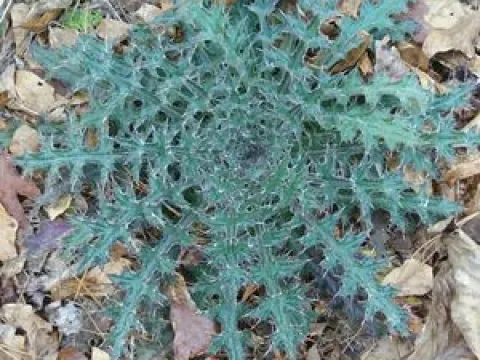
Carduus litigiosus
Carduus litigiosus
Carduus litigiosus is a biennial herb belonging to the Asteraceae family. While often categorized as a weed in agricultural landscapes, it plays a vital role in local ecosystems as a significant source of nectar for various pollinators, including bees and butterflies.
What the section contains
Carduus litigiosus
The reproduction of the species is primarily seed-based. The seeds are equipped with a pappus, allowing for efficient wind dispersal over considerable distances, which contributes to the plant's ability to rapidly colonize fallow fields and disturbed soil areas.
Seed germination typically occurs when soil temperatures reach 10 to 12 degrees Celsius. Optimal sowing results are achieved during early spring or autumn, providing the seedlings with sufficient moisture to establish their complex root systems before summer heat.
When cultivating, seeds should be sown at a depth of 1-2 centimeters. Covering them with a thin layer of soil is crucial, as the small seeds possess limited food reserves. Rolling the soil surface after planting ensures optimal contact and improves germination rates.
Successful establishment depends on ensuring that the soil is not overly compacted. Proper seedbed preparation, including fine-tuning the texture of the topsoil, significantly increases the percentage of successful sprouts and ensures uniform stand density.
Carduus litigiosus is highly adaptable and thrives in various soil types, ranging from sandy loams to heavier clay soils. However, it displays the most vigorous growth on well-drained, nutrient-rich soils that provide consistent moisture during the growing season.
The plant requires full sun exposure to reach its maximum potential. Lack of adequate lighting results in elongated, weak stems and significantly reduced flowering, which decreases the plant's overall value as an ornamental or ecological resource.
Regarding moisture, the species prefers moderate levels. It is remarkably drought-tolerant once established, thanks to a deep taproot that reaches moisture reserves in lower soil horizons. Nevertheless, supplemental irrigation can drastically improve biomass production.
Soil pH should ideally be neutral or slightly alkaline. While the species can tolerate moderate acidity, extremely low pH levels may limit nutrient uptake, specifically phosphorus, which is essential for healthy flower development and root strength.
Agricultural management of this species involves monitoring its spread, especially in fields intended for sensitive crops. Regular cultivation and crop rotation are standard practices to prevent excessive competition with primary agricultural products.
Pest pressure on Carduus litigiosus includes various insects, most notably aphids and curculionid beetles. These pests damage the vascular tissue of the leaves and stems, creating entry points for secondary infections and reducing the plant's vitality.
Fungal diseases, including powdery mildew and rust, are frequent threats, particularly in high-humidity climates or areas with poor air circulation. These pathogens form visible spores on leaves, leading to chlorosis and premature senescence of the plant tissue.
Root rot represents a significant danger, especially in fields with heavy clay content or those prone to waterlogging. These conditions create an environment conducive to pathogen proliferation, which often leads to total plant death if left unmanaged.
Proactive management is required to limit the spread of diseases. This includes adequate spacing between plants, the removal of heavily infested individuals, and ensuring that no debris is left on the soil surface to harbor fungal spores over winter.
Chemical control, if necessary, should be applied with precision. Given the ecological importance of this plant, it is recommended to use systemic herbicides only when integrated pest management (IPM) strategies have proven insufficient for field sanitation.