
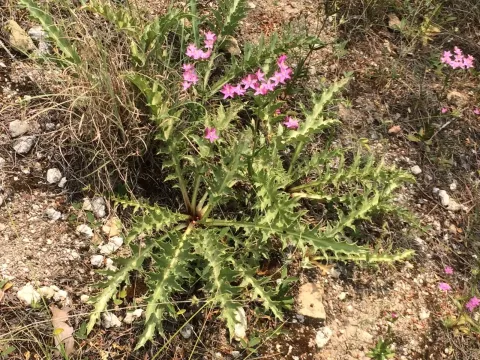
Carlina gummifera
Carlina gummifera
Carlina gummifera, often referred to in botanical literature by its synonym Atractylis gummifera, is a perennial herbaceous plant belonging to the Asteraceae family.
What the section contains
Carlina gummifera
The species is native to the Mediterranean basin. It is typically found in arid, rocky environments, pastures, and scrublands, thriving in regions with high temperatures and seasonal drought.
For cultivation, the plant requires well-drained, sandy, or calcareous soils. It is highly intolerant of waterlogging, which can rapidly induce root rot and systemic failure.
Botanically, it features a low-growing rosette of foliage and a solitary flower head. The plant displays distinct xerophytic adaptations, such as succulent roots and leathery leaves, to survive harsh conditions.
Its historical usage was primarily medicinal; however, due to the presence of potent toxic compounds like atractyloside, it is no longer widely cultivated or utilized without rigorous professional oversight.
The primary threats to Carlina gummifera are fungal pathogens that attack the root system, usually triggered by excessive irrigation or poorly drained soil conditions.
Insect larvae and certain species of nematodes often target the primary root, which serves as the energy storage organ, causing severe stunting or death of the plant.
Competition from fast-growing weeds can significantly hinder the establishment of seedlings during the initial growing season.
Environmental factors, such as extreme winter humidity combined with cold temperatures, can also lead to crown rot in unprotected field conditions.
Integrated pest management strategies focusing on soil aeration and site selection are essential for maintaining the health of the plant population.