
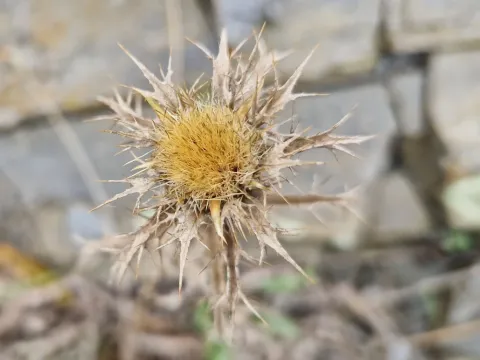
Carlina hispanica
Carlina hispanica
Sowing of Carlina hispanica is best performed in early spring, once soil temperatures reach 10–12 degrees Celsius. The seeds exhibit good germination rates, though stratification may be required if planting is done in late autumn to ensure uniform emergence in spring.
What the section contains
Carlina hispanica
Seed depth should not exceed 1–2 centimeters, as the small seeds require light exposure to trigger germination processes. Optimal planting density involves row spacing between 45 and 60 centimeters to facilitate maintenance and allow for proper air circulation.
Selecting sites with excellent drainage is crucial, as waterlogged soil during the germination phase can lead to seed rot. Using high-quality, cleaned, and sorted seeds is the foundation for establishing a successful plantation of this crop.
Seedlings develop slowly during the initial stages, making weed control a critical task. Regular inter-row cultivation during the first month allows the plants to establish a robust basal rosette before facing environmental pressures.
Alternatively, the greenhouse starting method can be used to raise seedlings, which reduces the adaptation period once the young plants are transplanted to their permanent outdoor location.
Carlina hispanica is a drought-tolerant crop that thrives in open, sun-exposed areas. As a member of the Asteraceae family, the plant is well-adapted to surviving in arid conditions with minimal water input.
The plant has moderate soil requirements, preferring light, sandy, or rocky substrates with a neutral to slightly alkaline pH. Heavy clay soils can impede the development of the primary taproot, which is essential for the plant's stability.
Originating from Mediterranean climates, the species is highly adapted to summer heat and is not demanding regarding frequent irrigation. It successfully overwinters in temperate regions, provided that drainage is adequate to prevent root freezing.
The crop is sensitive to excessive nitrogen fertilization, which can stimulate excessive foliage growth at the expense of floral development. Phosphorus and potassium-based fertilizers are recommended to support reproductive cycles.
In regions experiencing harsh winters, mulching the root zone with organic matter is a recommended practice to protect the plant from freezing temperatures and ensure vitality in the following season.
The economic value of Carlina hispanica lies primarily in its inflorescences, which are utilized in the pharmaceutical industry and as decorative dried flowers. Yield depends heavily on planting density and the soil's fertility levels.
Following good agricultural practices can result in stable yields of dried flower heads that maintain their aesthetic value for an extended period. Harvesting is typically conducted during full bloom to ensure maximum concentration of bioactive compounds.
A key biological feature of the species is the formation of flower heads with tough, persistent bracts, which keep their shape and appearance well after drying, making them a high-demand commodity in the floral trade.
The crop also serves as a valuable nectar source, attracting numerous pollinators during the flowering peak. Integrating these plantings into an apiary system can enhance the overall productivity and diversity of a farm.
Peak yields are generally achieved in the second or third year of growth, as the plant becomes fully established and develops an extensive root system capable of supporting high biomass production.
The primary threats to Carlina hispanica plantations are fungal diseases exacerbated by high humidity and poor soil drainage. Powdery mildew is a common concern that requires timely intervention with approved fungicides.
Root rot is the most dangerous pathogen, capable of destroying significant portions of the crop rapidly. Strict crop rotation is necessary, avoiding the placement of this plant after related species from the Asteraceae family.
Among pests, aphids and leaf-eating insects pose the greatest risks by damaging young tissues and floral stalks. Regular monitoring of pest populations is essential to enable prompt biological or chemical protection measures.
In neglected fields, invasive weeds can outcompete the crop for sunlight and nutrients. Timely mechanical weeding is a fundamental practice to protect the plants from competition and ensure optimal health.
Improper watering regimes can lead to leaf chlorosis, a sign of metabolic disruption or micronutrient deficiency, which requires an immediate review and adjustment of the nutrient management program.
Harvesting of Carlina hispanica inflorescences is performed manually or mechanically during dry, sunny weather. It is important to cut the flower heads before the seed-setting phase begins if the objective is high-quality decorative or medicinal raw material.
After harvesting, the material should be placed immediately in a shaded, well-ventilated area for drying. Uniform air circulation is crucial to prevent the darkening of the bracts and to maintain the plant's natural coloration.
For long-term storage, the dried flower heads should be kept in paper containers that allow for air exchange while protecting the product from atmospheric humidity.
When the cultivation objective is seed production, harvest should occur only after full seed maturity, indicated by the darkening of the flower heads and the onset of seed shedding.
Post-harvest crop residues can be shredded and incorporated back into the soil as organic matter, which enhances soil fertility and improves the physical structure of the plantation site for future crops.