
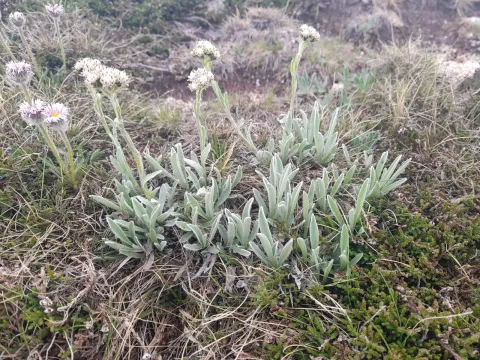
Carpathian pussytoes
Antennaria carpatica
Carpathian pussytoes (Antennaria carpatica) is a perennial herbaceous plant belonging to the Asteraceae family. It is a native species primarily found in high-altitude mountain ecosystems, such as the Carpathians.
What the section contains
Carpathian pussytoes
The plant is highly valued for its silvery, woolly foliage arranged in basal rosettes and its distinct flower heads. These botanical characteristics help the plant retain moisture and withstand the harsh winds of alpine environments.
Cultivation requires well-draining, rocky, or sandy soil with a neutral to slightly acidic pH. Poor soil is actually preferred, as excessive nutrients often lead to lush but weak growth that lacks the plant's characteristic compact habit.
Full sun is an essential requirement for this species. Without direct exposure to sunlight, the foliage loses its silvery luster and the plant becomes prone to stem elongation, weakening the overall structure.
Regarding water management, it is crucial to avoid saturation. The plant thrives in environments where it can dry out between watering sessions, mimicking its natural dry, mountain ridge habitat.
The most significant threat to Antennaria carpatica is root rot caused by poor soil drainage. If the root zone remains wet for extended periods, the plant will quickly succumb to fungal infections.
While generally pest-resistant, the plant can occasionally host aphids during the peak growing season. Monitoring the plants in late spring is recommended to identify any infestations early.
Weeds pose a constant threat to the development of this slow-growing plant. Aggressive grasses and broadleaf weeds can easily overwhelm the rosettes, so diligent manual weeding is required in the first years of growth.
Winter survival is typically high, but the combination of freezing temperatures and waterlogged soil is lethal. Ensuring good winter drainage is the primary defense strategy against cold-related losses.
Using harsh chemical fungicides should be avoided, as the plant is sensitive to synthetic additives. It is better to rely on proper cultural practices and physical site preparation to maintain plant health.