
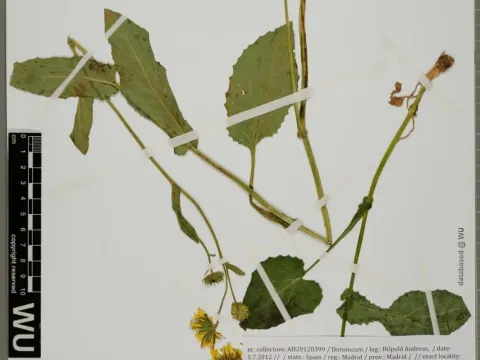
Carpetanian leopard's bane
Doronicum carpetanum
Carpetanian leopard's bane (Doronicum carpetanum) is a perennial herbaceous plant belonging to the Asteraceae family. Native to the mountain ranges of the Iberian Peninsula, it thrives in cool, alpine environments and moist, rocky slopes.
What the section contains
Carpetanian leopard's bane
In cultivation, this plant requires a cool climate and protection from intense, direct sunlight. It is best suited for semi-shaded areas, as extreme heat can lead to rapid wilting and reduction in the flowering period.
The soil must be fertile, humus-rich, and well-drained. While the plant appreciates consistent moisture, it is sensitive to waterlogged conditions, which can be fatal to its root system. Amending the soil with compost improves nutrient availability and texture.
Propagation is typically achieved through division of the root clumps or by seed sowing in early spring. The plant forms dense rosettes of foliage, which help suppress weeds if managed with appropriate spacing in the field.
Regular irrigation is essential during the growing season to ensure steady development. Adding a layer of mulch around the plants helps maintain soil moisture and protects the roots from temperature fluctuations.
Slugs and snails are the most significant pests for Carpetanian leopard's bane, as they are attracted to its soft, lush foliage. Integrated pest management strategies, such as physical barriers or biological baits, are recommended for control.
Fungal diseases, including powdery mildew, can occur if the plant is grown in areas with poor air circulation. Ensuring adequate spacing between individual plants is a key measure to reduce humidity around the foliage.
Root rot caused by Phytophthora or Pythium species is a common threat in poorly drained soils. Improving soil drainage and monitoring the watering regime are critical for the long-term survival of the crop.
Leaf spot diseases may appear during periods of prolonged rainfall, causing dark lesions on the foliage. Removing infected leaves promptly can help prevent the spread of the pathogen to the rest of the plant.
Aphids can occasionally infest flower buds, causing malformation and stunting. Regular inspection during the early growth stages allows for timely intervention using organic soap sprays or other gentle treatments.