
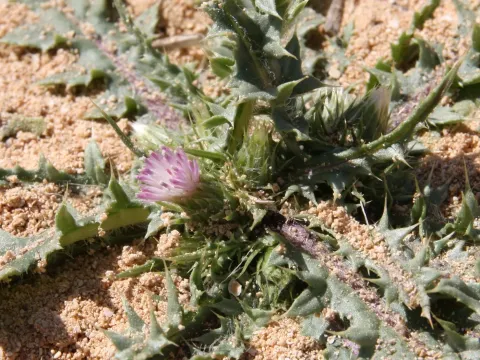
Carduus getulus
Carduus getulus
Carduus getulus is a resilient plant species belonging to the Asteraceae family, adapted to specific arid environmental niches.
What the section contains
Carduus getulus
Sowing procedures are best initiated during the early spring season, ensuring soil temperatures are conducive to germination.
The seeds of this species demonstrate high dormancy levels, which can be mitigated through proper pre-sowing stratification techniques.
Optimal planting depth ranges between 1 and 2 centimeters, providing sufficient cover while allowing the seedling to reach the surface.
Standard agricultural practice involves keeping rows spaced widely apart to accommodate the large basal rosettes typical of the thistle.
The plant thrives in well-drained soils, showing a strong preference for sandy or rocky substrates common in its native range.
Exposure to full direct sunlight is the primary requirement for healthy growth and optimal development of the floral structures.
This species exhibits remarkable tolerance to moisture deficiency, making it an excellent candidate for low-input agricultural systems.
Soil pH levels should generally be neutral or slightly alkaline to facilitate the efficient uptake of essential soil micronutrients.
While the plant is hardy, it requires protection from waterlogging, which can cause significant damage to its taproot system.
The primary agricultural value of this thistle lies in its role as a high-quality forage plant for wild pollinators and honey bees.
In certain ecological restoration projects, it serves as a robust cover crop used to stabilize soil and prevent water erosion.
The biomass can be utilized for green manure, contributing organic matter to soils that are otherwise low in fertility.
Seed yields vary based on environmental factors, particularly the success of insect-mediated pollination during the flowering stage.
Systematic harvesting of plant tissue before the lignification phase ensures the highest concentration of digestible organic compounds.
Aphid infestations are the most frequent biological challenge, particularly affecting young rosettes during the early vegetative cycle.
Fungal issues such as powdery mildew may arise if humidity levels remain excessively high without adequate air movement.
Weevil larvae can pose a threat to seed production by feeding directly within the developing floral heads of the plant.
Implementing a strict crop rotation schedule helps in reducing the persistence of soil-borne pathogens near the growing area.
Monitoring for early signs of damage is essential for maintaining a healthy stand and preventing widespread pest outbreaks.
Harvesting strategies are determined by the intended final use, whether it be for biomass processing or seed collection.
Mechanical mowing is the most efficient method for handling large quantities of vegetative biomass during the peak growth season.
Seed heads should be collected once they show signs of brown coloration to avoid the risk of premature shattering in the field.
Post-harvest conditioning involves drying the plant material in well-ventilated areas to prevent mold and preserve quality.
Proper storage in cool, dry conditions is vital for maintaining seed viability for future planting and propagation efforts.