
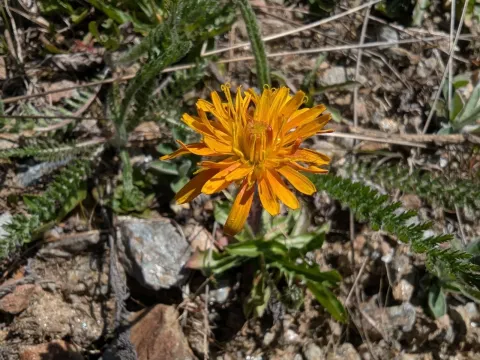
Golden hawksbeard
Crepis aurea
Golden hawksbeard (Crepis aurea) is a perennial herbaceous plant belonging to the Asteraceae family. It is native to the mountainous regions of Central and Southern Europe, where it thrives in alpine meadows and rocky slopes.
What the section contains
Golden hawksbeard
Botanically, the plant is characterized by a basal rosette of lanceolate leaves and solitary flower heads featuring golden-yellow petals, which often exhibit a reddish or bronze underside. The plant's structure is perfectly adapted to withstand the harsh conditions of high-altitude habitats.
For successful cultivation, Crepis aurea requires well-drained, nutrient-rich, and slightly acidic to neutral soil. Proper soil structure is essential, as the roots are sensitive to waterlogging and poor aeration, which can lead to rapid decay.
The culture thrives in open, sunny locations with plenty of natural light. Exposure to direct sunlight is crucial for maintaining the plant's compact form and promoting an abundant bloom during the growing season.
Regarding climate, the plant is highly cold-hardy and well-suited for temperate climates. It requires a distinct cool dormancy period, which allows the plant to rejuvenate and prepare for the next flowering cycle in the spring.
Root rot is the most significant threat to golden hawksbeard, typically caused by excessive moisture levels in the soil or poor drainage systems. Maintaining appropriate soil moisture is essential for plant health.
Aphids and spider mites are the most common pests that affect Crepis aurea. They feed on the succulent leaves, causing yellowing and weakening the plant if not addressed with timely interventions.
Slugs and snails can pose a danger to young seedlings or fresh rosettes during humid weather. Protective barriers or organic bait can be used to mitigate damage during the early growing season.
Cultural practices such as removing dead foliage and ensuring adequate spacing between plants significantly improve air circulation, thereby reducing the risk of fungal outbreaks.
If chemical control is necessary, select fungicides and insecticides specifically labeled for ornamental perennials to ensure safety and effectiveness while preventing damage to the delicate flower structure.