
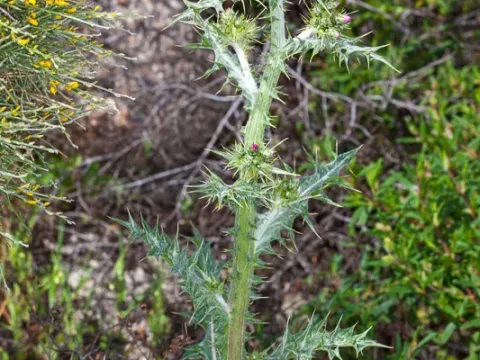
Carduus cephalanthus
Carduus cephalanthus
Carduus cephalanthus is a herbaceous plant belonging to the Asteraceae family. It is recognized for its ecological importance and potential utility in sustainable agriculture.
What the section contains
Carduus cephalanthus
Seed sowing is best conducted during the autumn months to allow for natural stratification, which significantly improves germination rates in the following spring.
For spring planting, the soil temperature should ideally reach at least 10 degrees Celsius to ensure the seeds break dormancy and emerge uniformly.
Seeds should be planted at a shallow depth of approximately 1 to 2 centimeters to provide sufficient contact with moisture while allowing light penetration for sprouting.
Maintaining proper row spacing is essential to minimize competition during the plant's rosette stage, which is the period of slowest development.
This species is highly adaptable, exhibiting notable drought tolerance and preferring open, sunny locations with direct sunlight exposure for most of the day.
It thrives in well-drained, sandy or loamy soils, showing a unique ability to grow in poor or slightly saline environments where other crops struggle.
While not heavily dependent on high levels of nitrogen fertilizer, the plant benefits from balanced mineral soil composition to produce healthy flower heads.
Agricultural management requires careful weed control during the first season, as the plant is sensitive to interference from faster-growing invasive grasses.
Proper airflow between plants is necessary to prevent the accumulation of humidity, which can lead to common fungal issues within the canopy.
The primary economic use for Carduus cephalanthus is in the beekeeping industry, as it serves as a robust source of high-quality nectar throughout the summer months.
Seed harvesting should be performed when the flower heads start to dry, typically using mechanized methods to avoid excessive field losses during shedding.
The plant is also researched for its potential as a source of medicinal compounds, with roots and stems sometimes being processed for biochemical extraction.
In addition to nectar production, the biomass can be utilized in soil management practices, as the deep roots help in improving soil structure over time.
Yield stability is generally high, provided that the weather conditions during the flowering phase allow for successful insect pollination.
The most common pests include various types of weevils and aphids that specifically target the developing floral parts and sap of the plant.
Fungal pathogens like powdery mildew are the most significant threats to plant health, particularly in regions with high humidity or poor field drainage.
Seedlings are prone to damage from underground insects, such as wireworms, which necessitate early monitoring and integrated pest management strategies.
Crop rotation is recommended to break the lifecycle of specific pathogens and pests that may persist in the soil over several growing seasons.
Environmental management and the use of targeted biological controls are advised to ensure the long-term productivity of the field without harming local bee populations.