
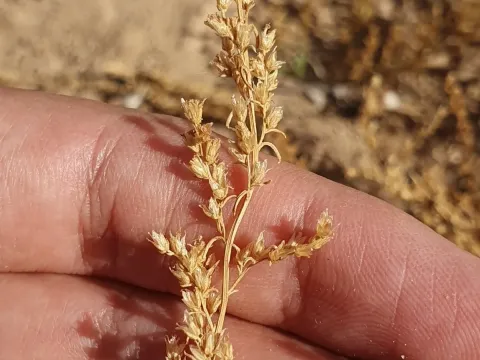
Field wormwood
Artemisia campestris
Field wormwood (Artemisia campestris) is a perennial herbaceous plant belonging to the Asteraceae family. It is recognized for its ability to colonize sandy habitats, dunes, and dry, impoverished soils where competition from other plants is limited.
What the section contains
Field wormwood
The plant exhibits exceptional drought resistance, making it suitable for cultivation in arid regions or on land with marginal soil fertility. It thrives in well-drained, porous soils that prevent moisture accumulation near the root collar.
As a sun-loving species, Artemisia campestris requires full exposure to sunlight to maintain its physiological balance and ensure the high concentration of secondary metabolites in its foliage.
Climatic requirements for field wormwood include moderate to high summer temperatures and excellent air circulation, which helps in preventing fungal infections often associated with high humidity.
Cultivation practices involve direct seeding or seedling transplanting. Soil preparation should focus on creating a fine tilth, ensuring proper seed-to-soil contact for successful germination.
Root rot is the primary disease threat for field wormwood, usually appearing when the soil drainage system fails or after prolonged periods of heavy rainfall, leading to plant collapse.
Insects such as aphids and leaf miners can occasionally infest the crop, causing stress to the plant and potential damage to the essential oil components found within the leaf tissues.
To mitigate the risk of pest outbreaks, growers should implement a crop rotation schedule and avoid planting in sites where other Asteraceae crops were grown in the previous season.
Biological control agents are preferred over synthetic pesticides, as the commercial value of the plant often relies on its organic certification for use in the pharmaceutical and cosmetic industries.
Routine scouting is essential to identify early signs of fungal spotting. If detected, immediate removal and destruction of infected parts can prevent the rapid spread of the disease throughout the field.