
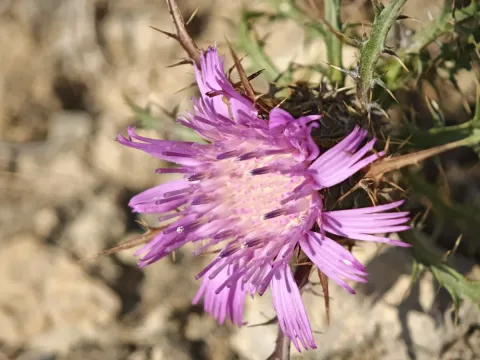
Atractylis humilis
Atractylis humilis
Atractylis humilis is a perennial herbaceous plant belonging to the Asteraceae family. Sowing is typically performed in early spring once the soil temperature consistently exceeds ten degrees Celsius.
What the section contains
Atractylis humilis
For optimal results, seeds should be sown in prepared soil beds, ensuring proper moisture levels to trigger the germination process successfully.
The recommended planting depth is shallow, approximately one centimeter, to allow seedlings to emerge quickly without exhaustion of energy reserves.
Maintaining adequate row spacing facilitates mechanical maintenance and helps minimize inter-plant competition for soil nutrients during the early stages.
Regular monitoring of seedbeds is essential to ensure that the emergence is uniform, which directly impacts the overall final crop yield.
This crop thrives in well-lit environments and requires full sun exposure for healthy physiological development and accumulation of secondary metabolites.
Atractylis humilis is highly adaptable to poor, rocky, and calcareous soils where many other conventional crops would fail to establish.
It possesses remarkable drought resistance, allowing it to withstand prolonged dry spells common in its natural habitats without supplemental irrigation.
Excellent soil drainage is paramount, as the plant is extremely susceptible to root rot and other fungal diseases caused by waterlogged soil conditions.
The plant shows high tolerance to diverse soil pH ranges, though it performs best in neutral to slightly alkaline sandy-loam mixtures.
- Root rot caused by Phytophthora species due to excessive soil moisture.
- Powdery mildew affecting the foliage during high humidity periods.
- Various aphid species that target tender shoots in late spring.
- Leaf beetles that may cause structural damage to the plant canopy.
- Soil-borne pathogens that thrive in compacted, poorly drained fields.
Effective management includes maintaining optimal field hygiene and preventing moisture accumulation to reduce the risk of primary pathogen attacks.
The harvesting stage is critical and is performed when the plants reach peak flowering, ensuring that chemical constituents are concentrated in the tissue.
Techniques involve mechanical or manual cutting at the base of the stem, ensuring the root system remains undisturbed for further vegetative growth.
Post-harvest management involves immediate transport to drying facilities to preserve the quality and integrity of the harvested plant material.
Controlled air circulation is necessary during the drying process to ensure uniform water removal without compromising the plant's essential compounds.
Following the dehydration phase, the product is cleaned, graded based on quality standards, and packaged for market distribution or storage.