
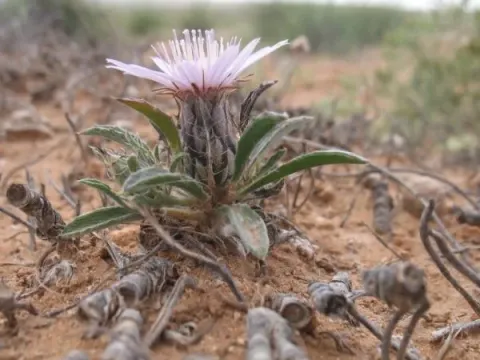
Atractylis delicatula
Atractylis delicatula
Sowing of Atractylis delicatula should be performed during the early spring when soil temperatures consistently reach at least 12 degrees Celsius for optimal germination.
What the section contains
Atractylis delicatula
Seeds should be planted at a shallow depth of approximately 1 centimeter in well-aerated, sandy soil mixtures to prevent compaction and rot.
For large-scale cultivation, precision seed drills are recommended to ensure uniform spacing and to facilitate later inter-row mechanical weeding.
The use of cold stratification before planting can significantly increase germination rates, mirroring the natural climatic cycles of the plant's native habitat.
Adequate soil moisture must be maintained during the first two weeks post-sowing, after which the plant becomes highly drought-tolerant and less dependent on water.
Atractylis delicatula belongs to the Asteraceae family and is recognized for its preference for sunny, arid environments with excellent drainage systems.
The plant thrives in alkaline soils and is highly adapted to nutrient-poor landscapes where other agricultural crops struggle to maintain growth.
Climate requirements include long, hot summer days and minimal humidity, as the plant is evolved to minimize evapotranspiration through its morphological traits.
During the dormant season, the plant requires protection from freezing temperatures if the soil moisture levels are high, as water retention in tissues can cause damage.
Effective agricultural management involves minimal intervention in soil structure, as the species is sensitive to root disturbances during its active growth phase.
The primary threats to this species are soil-borne fungal pathogens, such as Pythium and Rhizoctonia, which thrive in stagnant, poorly drained water conditions.
Leaf-feeding beetles can cause significant damage during the intensive flowering period, leading to a reduction in the overall plant vigor and vitality.
Preventive measures include the application of biological fungicides and maintaining a strict crop rotation schedule to break the life cycle of common pests.
Root aphids pose a hidden danger, often damaging the root system before the symptoms become clearly visible on the aerial parts of the Atractylis plants.
Field sanitation remains the most critical defense, involving the removal of crop residues that could harbor overwintering stages of harmful agricultural insects.