
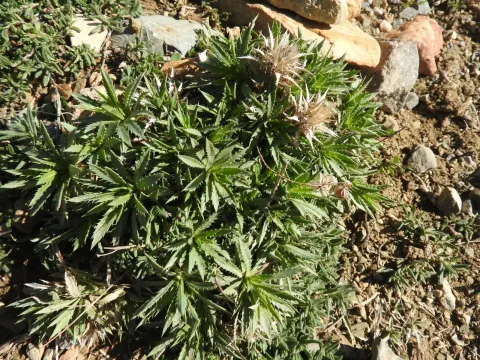
Atractylis caespitosa
Atractylis caespitosa
Atractylis caespitosa is a perennial herbaceous plant belonging to the Asteraceae family. Known for its tufted growth habit, it is a specialized species adapted to harsh, resource-limited environments typical of arid regions.
What the section contains
Atractylis caespitosa
Botanically, the plant forms dense cushions or mats, a structural adaptation that helps it reduce water loss and protect its sensitive root zone from extreme solar radiation and mechanical damage in open rocky areas.
The native distribution of this species is largely associated with Mediterranean-type ecosystems. It thrives in well-drained, nutrient-poor soils, such as limestone crevices, gravel slopes, or sandy substrates where competition from other vegetation is minimal.
Regarding climatic requirements, the plant is highly xerophytic. It demands full sun exposure and is particularly sensitive to soil compaction and high moisture content, which can trigger physiological stress in the root system.
While not a primary commercial crop, its biological characteristics make it an interesting subject for xeriscaping and ecological research. It represents a resilient genetic resource capable of surviving in environments that are unsuitable for conventional agricultural crops.
The primary threats to Atractylis caespitosa include habitat loss caused by land development, urbanization, and agricultural expansion, which fragment its natural range and isolate individual plant populations.
Insect pests can damage the reproductive parts of the plant, potentially limiting seed production. In its natural environment, herbivory by local fauna can also pose a risk to the vegetative growth of younger, more vulnerable plants.
Fungal pathogens represent the most significant internal risk, often appearing as root or crown rot when the plant is subjected to poor air circulation or excessive moisture within its growing medium.
Over-collection by botanical enthusiasts or collectors of medicinal plants further exacerbates the vulnerability of wild populations, leading to localized declines in density and genetic diversity.
Effective conservation strategies must focus on preserving specific micro-habitats and maintaining the integrity of the soil structure, which is essential for the long-term survival of this species in its natural ecosystem.