
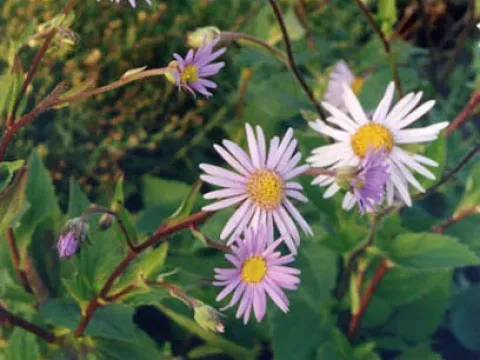
Himalayan aster
Aster himalaicus
Himalayan aster (Aster himalaicus) is a perennial herbaceous plant from the Asteraceae family. Known for its distinct mountainous origin, this species is propagated effectively through seeds or by dividing established clumps in early spring or autumn.
What the section contains
Himalayan aster
When starting from seeds, stratification is essential to simulate the cold conditions of its native habitat, significantly improving germination rates. Seeds should be sown at a shallow depth of approximately 0.5 to 1 centimeter.
For vegetative propagation, dividing the rhizomes every few years maintains plant vigor. This process should be undertaken while the plant is dormant or just beginning its active growth cycle to minimize transplant stress.
Seedlings grown in containers should be hardened off before being transferred to their final location in the garden, ensuring they are gradually acclimatized to the external environment.
Optimal planting spacing is between 30 and 45 centimeters, providing enough area for the plants to spread naturally without competing for light or nutrients in the soil.
As a native of alpine meadows, this species demands excellent drainage and high levels of sunlight. It performs best in open, sunny locations where it can access natural light throughout most of the day.
The soil should be well-drained, moderately fertile, and slightly acidic or neutral. Heavily compacted or waterlogged soils are highly unsuitable and will likely lead to root rot in this particular aster species.
Climate adaptability is one of the Himalayan aster's strengths, as it thrives in cool temperatures. It is highly winter-hardy, making it a reliable choice for gardens in regions with significant temperature fluctuations.
Watering should be regular, particularly during the growing season, but it is critical to allow the soil surface to dry slightly between watering intervals to maintain a healthy root system.
Regular fertilization with low-nitrogen, balanced fertilizers can promote more robust blooms without stimulating excessive vegetative growth, which can weaken the plant's structural integrity.
Fungal diseases, especially powdery mildew, represent the most significant threat to the Himalayan aster, usually triggered by poor air circulation and excessive humidity levels in the planting environment.
Pests such as aphids and spider mites can infest the foliage, particularly during dry spells. These pests weaken the plant and can serve as vectors for secondary viral infections that affect bloom quality.
Root system issues are often associated with soil pathogens if the drainage is insufficient. Maintaining a healthy soil structure is the primary defense against these invisible threats to plant health.
Sanitation practices, such as removing fallen leaves and dead stalks at the end of the season, are essential for reducing the carry-over of pathogens into the following growing year.
- Monitor foliage regularly for early signs of mildew.
- Apply natural predatory insects to control aphid populations.
- Improve air circulation by thinning out overly dense plantings.