
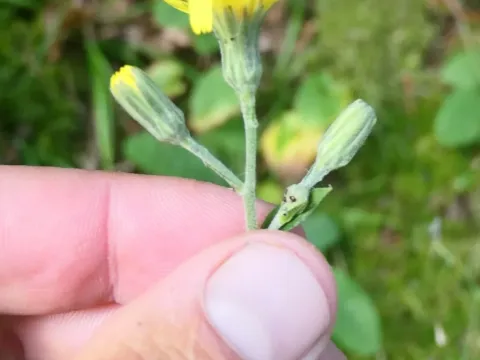
Hieracium racemosum
Hieracium racemosum
Hieracium racemosum is a perennial herb belonging to the Asteraceae family. It is characterized by its robust root system and upright stems, reaching significant heights during the flowering season.
What the section contains
Hieracium racemosum
This species is highly adaptable, thriving in nutrient-poor and well-drained soils. It prefers sunny environments and exhibits remarkable drought resistance, which makes it an interesting candidate for low-input agricultural systems.
Botanically, the plant develops basal leaf rosettes and branching inflorescences. This growth habit allows it to compete effectively for space and sunlight in varied terrain, from pastures to forest edges.
Climatically, it is well-suited to temperate regions, showing resilience to both cold winters and hot, dry summers. Its ability to grow on sandy or stony substrates provides a significant advantage in marginal farming areas.
Economically, it is valued for its potential use as a component in diverse pasture mixtures. Furthermore, it contains various bioactive compounds, making it a subject of interest in herbal medicine and forage science.
The primary threats to Hieracium racemosum include various fungal infections, most notably powdery mildew. This pathogen develops under high humidity and can significantly decrease the overall biomass quality.
Rust diseases also pose a major risk, manifesting as pustules on the foliage that hinder photosynthesis. These infections can spread rapidly across a field if environmental conditions are conducive to fungal growth.
Pest pressures are primarily caused by aphids, which feed on the sap of young stems and floral buds. These insects can also serve as vectors for various plant viruses, further complicating the cultivation process.
Seed head damage by dipteran larvae is a common occurrence, which can hinder natural propagation. Monitoring for these pests is essential for those harvesting the seeds for further planting or research.
Integrated pest management strategies, such as mechanical weeding and the selection of disease-resistant varieties, are recommended to maintain high yields and plant health throughout the season.