
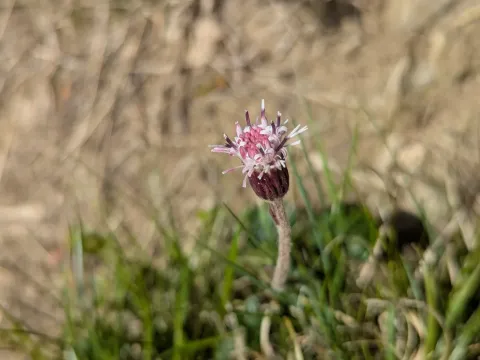
Homogyne
Homogyne
Homogyne is a genus of perennial herbs belonging to the Asteraceae family. These plants are native to the mountainous regions of Central and Southern Europe, adapted to rocky slopes, alpine meadows, and moist woodland environments.
What the section contains


Homogyne
The plant is characterized by its rhizomatous growth habit, which allows it to form low-growing, dense mats. The leaves are typically basal, often heart-shaped or orbicular, and possess a distinct texture suitable for cold-climate survival.
For successful cultivation, Homogyne requires cool ambient temperatures and a site with partial shade. They thrive in rich, well-draining, slightly acidic soil that mimics the organic-rich substrate found in their native alpine habitats.
Propagation is primarily achieved through division of the rhizomes during the dormant season. Providing adequate drainage is critical, as the roots are highly susceptible to rot if allowed to sit in waterlogged soil for extended periods.
Maintenance involves ensuring consistent moisture throughout the growing season without over-saturating the medium. In gardening, they are excellent choices for rock gardens, north-facing borders, and woodland areas where they can spread naturally.
The primary threats to Homogyne include fungal infections that manifest under conditions of poor air circulation and excessive humidity. Root rot is the most common cause of plant loss in cultivated environments.
Slugs and snails are the most frequent pests, particularly in spring when tender new foliage emerges. These mollusks can rapidly defoliate young plants if left unchecked, making pest control a necessary part of the management plan.
To prevent disease, it is essential to avoid crowding plants and to ensure that the surrounding soil surface is well-drained. Using a layer of grit or decorative stone around the base can help deter mollusks and keep the crowns dry.
Regular inspection of the foliage is recommended to catch infections early. If fungal spotting is observed, removal of affected leaves is the first step in stopping the spread of the pathogen to the rest of the cluster.
In cases of severe infestation or infection, targeted application of appropriate fungicides or molluscicides may be necessary, although prevention through proper placement is always the preferred strategy for these hardy plants.