
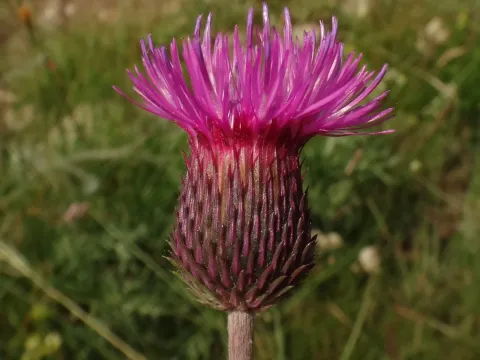
Hill Thistle
Carduus collinus
The Hill Thistle, scientifically known as Carduus collinus, is a perennial herbaceous plant belonging to the Asteraceae family. It is recognized for its robust nature and ability to thrive in environments that are often unsuitable for conventional agricultural crops.
What the section contains
Hill Thistle
Propagation is primarily achieved through seeds, which are equipped with pappi for wind dispersal. In an agricultural setting, seeds should be sown in prepared soil, ensuring that they are not buried too deeply, as they require light to stimulate germination.
Timing is crucial; late autumn sowing is generally considered most effective, as it allows for natural cold stratification over the winter months. This process ensures higher germination rates and more uniform emergence during the following spring.
Sowing density should be managed to accommodate the plant's rosetta-like growth habit during the initial stages. Proper spacing is essential to minimize competition between individual plants and to facilitate easier mechanical weeding if necessary.
Given the small size of the seeds, achieving good seed-to-soil contact is vital. A light rolling or compaction of the soil surface after sowing can significantly improve water retention around the germinating seeds and increase overall success rates.
This species is highly adapted to sunny, open areas. As a heliophilous plant, it requires full sun exposure to reach its maximum biological potential and to ensure high-quality flower production, which is essential for its nectar-secreting functions.
Soil preferences lean towards dry, well-drained, and nutrient-poor soils. It is particularly adept at utilizing rocky or sandy substrates where the deep taproot can easily access minerals and deep-seated moisture during summer droughts.
The Hill Thistle is exceptionally hardy, capable of withstanding the harsh temperature fluctuations of temperate climates. Its winter resistance is a significant advantage, allowing it to survive frost without the need for additional soil cover.
Moisture requirements are minimal; the plant is naturally drought-tolerant. In fact, excessive soil moisture or stagnant water can be detrimental, leading to root rot and other moisture-related pathogens that can kill the plant.
Agronomic management is straightforward. During the first growing season, keeping the area free from fast-growing weeds is the primary task, as the thistle invests much of its initial energy into root development rather than vertical growth.
The economic utility of Carduus collinus is multifaceted, serving as both a forage crop for pollinators and a potential source of botanical material for various industries. It is particularly valued in apiaries for its abundant nectar supply.
When harvested for medicinal purposes, the aerial parts are gathered during the peak of the flowering period. Yields are stable provided the plants have had sufficient access to sunlight and are not severely impacted by early-season competition.
Seed yield is exceptionally high, which makes the plant a candidate for ecological restoration projects or land reclamation. Its ability to stabilize soil makes it useful for preventing erosion on hilly slopes and abandoned agricultural lands.
To optimize the output of secondary metabolites, harvesting should be done in dry weather conditions. Proper drying of the harvested biomass is crucial to maintain quality and prevent the growth of molds during storage.
By integrating this plant into non-arable parts of a farm, producers can enhance local biodiversity while benefiting from its soil-improving properties, such as the deep aeration provided by its extensive root system.
Rust fungi represent the most significant threat to the health of the Hill Thistle. These pathogens manifest as pustules on the foliage and can lead to severe chlorosis, effectively reducing the plant's ability to undergo photosynthesis.
Powdery mildew can also occur, particularly during seasons with high atmospheric humidity or poor air circulation. This disease covers the leaves in a dense, white mycelium, significantly weakening the plant's overall vigor and yield potential.
Various insect pests, including specific seed-feeding weevils, pose a risk during the reproductive stage. These insects burrow into the flower heads and consume the developing seeds, which can drastically reduce future propagation potential.
Aphid infestations are common on young, succulent growth. While the plant can usually tolerate some damage, high populations can cause stunted development and may also facilitate the transmission of viral diseases between individual plants.
A proactive approach to integrated pest management is recommended. This includes maintaining appropriate planting density to promote airflow and removing any plants that show early signs of systemic disease to prevent wider spread across the crop.