
Holocarpha
Holocarpha
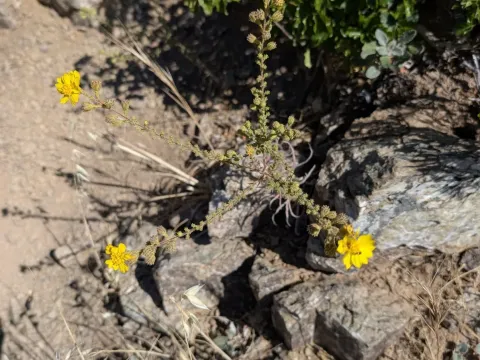
Holocarpha is a genus of annual flowering plants within the Asteraceae family, native to the diverse landscapes of California. These plants are often referred to as tarweeds due to the sticky, resinous substance secreted by their glandular hairs, which acts as an adaptation to minimize water loss.
What the section contains
Holocarpha
From a botanical perspective, Holocarpha species are characterized by their erect, branched stems and narrow, alternate leaves. The inflorescences consist of small, showy yellow flower heads that bloom late in the season, providing a critical late-summer nectar source for local pollinators.
The cultural requirements for Holocarpha are strictly linked to its Mediterranean climate of origin. The plant thrives in full sun and requires well-drained soil, often performing well in disturbed, gravelly, or heavy clay soils where other species may struggle to establish deep root systems.
Agrotechnical practices for this genus focus on drought tolerance. Unlike conventional crops, Holocarpha does not require supplemental irrigation once established, making it a subject of interest for dryland farming projects that aim to utilize native flora for low-input production systems.
Potential economic applications for Holocarpha extend beyond its ecological value. Ongoing research into the plant's phytochemical profile suggests that its resinous oils could be extracted for industrial applications, including the potential development of specialized bio-based lubricants or additives.