
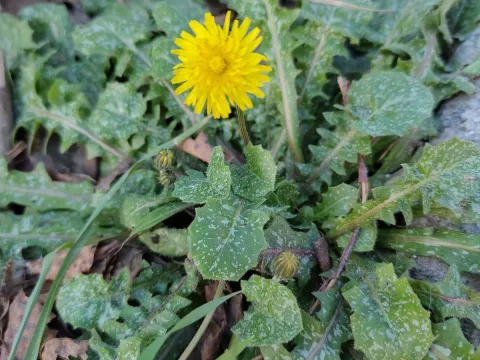
Holy hawksbeard
Crepis sancta
Holy hawksbeard (Crepis sancta) is a member of the Asteraceae family. It is recognized for its significant ecological adaptability, often found in Mediterranean grasslands, and is currently being evaluated for its potential as a supplementary forage crop.
What the section contains
Holy hawksbeard
The optimal sowing time is during the early spring when soil temperatures stabilize between 10 and 15 degrees Celsius. This timing ensures that the seeds germinate before the onset of the summer dry season, maximizing the utilization of available soil moisture.
The seeds are small, requiring a shallow sowing depth of approximately 1 to 2 centimeters. Ensuring good seed-to-soil contact is essential for uniform emergence, often achieved through light rolling after sowing.
Row planting with a spacing of 15–20 centimeters is recommended for field trials. This configuration allows for easier weed control and provides sufficient space for plants to develop their basal leaf rosettes effectively.
The plant demonstrates a strong ability to self-seed, which can be advantageous in permanent pasture systems where natural regeneration is desired. Establishing a robust stand during the first season is key to long-term success.
Holy hawksbeard thrives in well-drained, neutral to slightly alkaline soils. It is particularly well-suited to calcareous soils where it can express its full growth potential and maintain high nutritional value in its biomass.
Sunlight exposure is a critical factor for productivity. The plant performs poorly under shade; therefore, open fields with full sun exposure are necessary to maintain vigorous growth and dense leaf production.
Regarding moisture, while the crop is moderately drought-tolerant once established, consistent soil moisture during the seedling and rosette stages is required to achieve satisfactory yields of green matter.
Soil structure should be friable and aerated. Compaction can severely hinder root penetration and nutrient uptake, leading to stunted plants and diminished performance in the field.
Nutrient requirements are relatively modest compared to intensive fodder crops. However, a balanced application of phosphorus and potassium during soil preparation can significantly improve overall stand health and root development.
Powdery mildew represents a major threat during periods of high humidity and poor air circulation. Symptoms include white fungal patches on leaves, which reduce photosynthesis and crop quality.
Aphids are the primary insect pests, frequently attacking the tender foliage and developing flower stalks. Integrated pest management, including monitoring and biological control, is recommended for sustainable production.
Root rot, induced by waterlogging, can occur on heavy or poorly drained soils. Avoiding the selection of low-lying fields is the most effective preventative measure against this physiological and pathological issue.
Weed competition can be a major challenge during the slow establishment phase. Early-season mechanical weeding or the use of pre-emergent cultural practices is vital for crop success.
Maintaining a clean field environment and practicing crop rotation are essential to prevent the buildup of soil-borne pathogens. Monitoring the plantation for early signs of stress is crucial for timely intervention.