
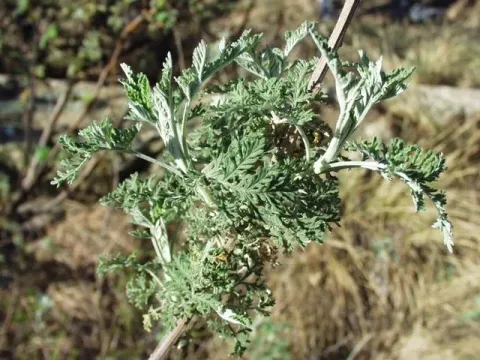
African wormwood
Artemisia afra
African wormwood (Artemisia afra) is a perennial shrub belonging to the Asteraceae family. It is typically propagated through seeds or stem cuttings, with cuttings often providing a faster and more uniform establishment in commercial fields.
What the section contains
African wormwood
Sowing seeds in a nursery or greenhouse should take place in late winter. This ensures that seedlings are robust enough for transplantation into the open field once the danger of frost has passed.
The soil preparation for sowing requires a fine-textured, well-draining substrate. Seeds should be sown on the surface or lightly covered with soil, as they require light exposure to facilitate optimal germination rates.
Transplanting to the permanent site requires a spacing of 50 to 70 centimeters between plants. This adequate spacing is essential to ensure proper airflow, which significantly reduces the incidence of fungal diseases.
Immediately after planting, irrigation is necessary to support root development. Once the plants are established, African wormwood demonstrates excellent drought tolerance, making it a low-maintenance crop in suitable climates.
This crop is highly heliophilic, meaning it thrives in full sun. Exposure to direct sunlight is crucial for the biosynthesis of secondary metabolites and essential oils, which define the plant's economic value.
African wormwood prefers light, sandy, or loamy soils with excellent drainage. It is highly sensitive to waterlogging, which can cause root rot; therefore, planting on raised beds is recommended in areas with heavy or clay-rich soils.
The plant grows well in regions with moderate temperatures. It is known for its resilience and ability to withstand dry periods, but it performs best when there is a consistent, balanced moisture level during its active growth phase.
Fertilization should be kept minimal. Excessive nitrogen promotes lush vegetative growth at the expense of essential oil concentration, leading to lower-quality medicinal or aromatic raw material.
Pruning is a mandatory agronomic practice for African wormwood. Regular trimming of woody branches encourages new, succulent growth and keeps the plant in a productive state for several years.
Productivity is measured by the quality and weight of the harvested green mass. Yield depends heavily on the harvest timing and the plant's maturity, with peak output reached in the second or third year.
Consistent yields can be maintained for several years if the crop is managed correctly. Proper sanitation and controlled harvesting allow the plant to regenerate effectively after every cutting cycle.
The yield of essential oil is the primary economic indicator for this crop. Timing the harvest during the peak flowering stage is critical, as this is when the secondary metabolites are most concentrated.
Agro-climatic factors play a significant role in determining the total biomass. High-quality production often favors regions with dry summers, as this stress factor encourages the plant to produce more volatile oils.
Post-harvest handling is as important as the yield itself. If not dried immediately, the fresh biomass can lose its aromatic properties, significantly reducing the market value of the harvested batch.
Fungal pathogens, particularly root rot, are the most significant threats to African wormwood. These diseases are almost always linked to poor drainage or overwatering during humid weather conditions.
Powdery mildew can be a problem if the plants are spaced too closely or if there is poor air circulation within the field. Maintaining good ventilation is the best preventative measure against this pathogen.
Pests such as aphids and spider mites can occasionally infest the plants, causing damage to the soft young shoots. These infestations are more likely to occur under stressful environmental conditions.
Integrated Pest Management (IPM) is recommended to control threats. Using biological controls, such as predatory mites or insecticidal soaps, is preferred over synthetic pesticides to maintain the purity of the medicinal raw material.
Early detection through regular field scouting allows for targeted treatment, preventing the spread of diseases and pests across the entire plantation and ensuring the long-term health of the crop.
Harvesting should be conducted at the onset of the flowering phase. At this time, the plant contains the highest level of active chemical compounds required for pharmaceutical and aromatic applications.
Shoots should be cut using sterilized blades at approximately 15 centimeters above the ground. This height allows for rapid regrowth and ensures that the base of the plant remains healthy and strong.
Once harvested, the plant material must be transported to a drying facility immediately. It should be kept out of direct sunlight to prevent the degradation of volatile compounds and oils.
Drying should take place in a well-ventilated, shaded environment at temperatures below 40 degrees Celsius. This controlled drying preserves the integrity of the plant's essential oils and medicinal properties.
Final storage must be in airtight, moisture-proof containers placed in a cool, dark location. This protects the dried product from environmental damage and ensures that its therapeutic potency is preserved until processing.