
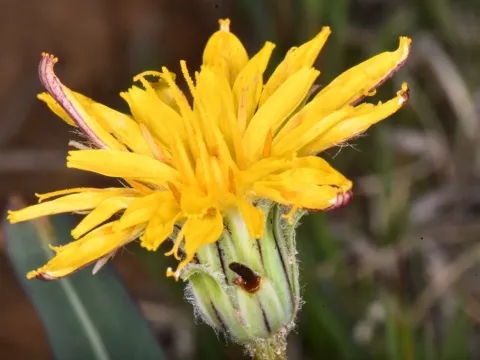
Agoseris
Agoseris
Agoseris is typically propagated through seeds, which often require a period of cold stratification to break dormancy. For best results, sow seeds in late autumn or early spring when soil temperatures reach approximately 10 to 12 degrees Celsius.
What the section contains


Agoseris
Seeds should be planted at a shallow depth of 1 to 2 centimeters. Because the seeds are quite small, they rely on sufficient surface moisture and light exposure to initiate the germination process successfully.
Using a drill-sowing method with row spacing of about 30 centimeters is recommended. This layout ensures each plant has adequate space to develop its characteristic basal rosette without excessive competition for nutrients.
When sowing in large plots, ensure the seedbed is finely pulverized to maintain good soil-to-seed contact. This significantly increases the germination rate and promotes uniform seedling emergence across the field.
Early maintenance is crucial as the seedlings are slow to establish. Keeping the area free of weeds during the first year of growth allows the Agoseris plants to develop deep root systems before facing seasonal stressors.
Belonging to the Asteraceae family, Agoseris is a rugged perennial that thrives in full sun. It is well-adapted to varied soil types, including gravelly or sandy substrates, reflecting its natural evolution in North American open grasslands and mountainous regions.
The plant exhibits remarkable drought tolerance due to its deep taproot, which allows it to access water reserves unavailable to shallower-rooted species. This makes it an excellent candidate for regions prone to erratic rainfall.
Soil pH should ideally be neutral, ranging between 6.0 and 7.5. Good drainage is non-negotiable, as the plant is highly susceptible to root rot if subjected to waterlogged conditions for extended periods.
Agoseris is cold-hardy and capable of surviving harsh winter temperatures. It remains dormant during the winter months, with the crown protecting the primary growing points until the return of warmer spring weather.
While not heavily dependent on high fertility, a moderate application of balanced fertilizer during the establishment phase can improve biomass production. However, over-fertilization should be avoided to prevent excessive vegetative growth at the expense of root development.
Fungal diseases, specifically powdery mildew, are the primary health risks for Agoseris. These usually manifest in humid environments with poor air circulation, making proper spacing between rows a vital preventative measure.
Aphids can pose a threat during the spring growth flush. These insects feed on the succulent leaves of the rosette, potentially reducing the photosynthetic capacity of the plant if infestations become severe.
Root-dwelling pests, such as wireworms, may occasionally damage the root system. Proper field sanitation and crop rotation help to keep these pest populations at manageable levels throughout the growing season.
Poor soil drainage leading to saturated conditions is a leading cause of plant mortality. Implementing proper site selection and ensuring natural runoff patterns help mitigate the risk of root pathogens.
General integrated pest management involves regular scouting and the use of healthy, disease-free seed stock. Maintaining healthy plants through optimal irrigation and spacing is the most effective defense against biological stressors.